重组抗DYKDDDDK/His标签双特异性单抗(L1.4/3D5) | Syd Labs PA008025.m2a
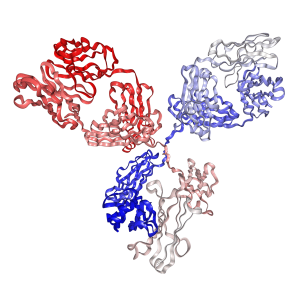
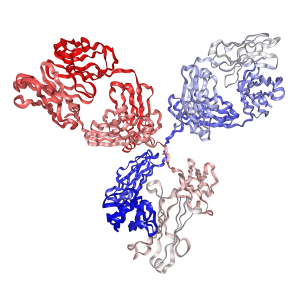
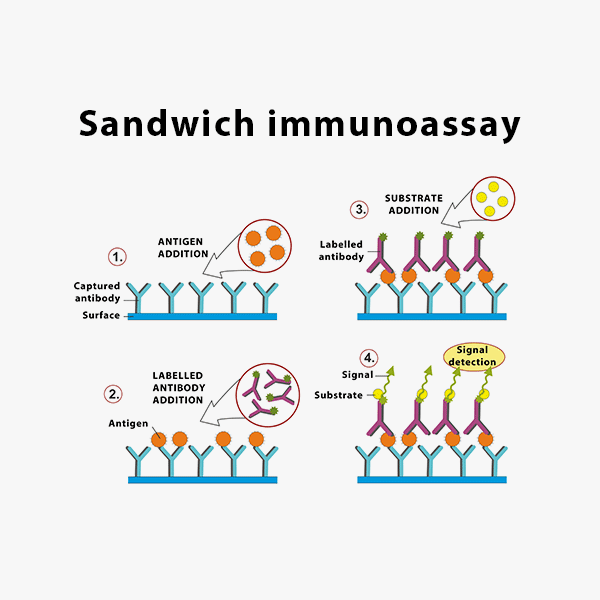
Syd Labs PA008025.m2a 是一款经哺乳动物细胞表达、Protein A 纯化的重组抗 DYKDDDDK / His 标签双特异性抗体,克隆号为 L1.4 / 3D5,属小鼠 IgG2a、κ 轻链。其中 L1.4 臂靶向 DYKDDDDK(FLAG)标签,可识别位于 N 端、Met N 端、C 端及蛋白内部的 FLAG 序列;3D5 臂靶向 His 标签(多组氨酸标签,常见为 6×His,序列 HHHHHH),能特异性结合融合在目的蛋白 C 端或内部的 His 标签。该双特异性抗体把对 DYKDDDDK(检测标签,强亲水表位、背景低)和 His 标签(纯化标签,可通过 Ni/Co 金属螯合柱一步纯化)两种最常用标签的识别能力整合到单一 IgG 分子,可实现”His 标签纯化 + FLAG 标签检测”的同一分子双功能工作流,适合双标签表达体系中目标蛋白的一步检测、Western Blot、ELISA、流式细胞术、免疫沉淀、免疫荧光、免疫细胞化学及偶联磁珠/琼脂糖后的蛋白亲和纯化,并可作为小鼠 IgG2a 同型对照使用。
产品参数
| 货号 | PA008025.m2a |
|---|---|
| 产品名称 | 重组抗DYKDDDDK/His标签双特异性单抗(L1.4/3D5) | Syd Labs PA008025.m2a |
| 英文名 | Recombinant Anti-DYKDDDDK / His-Tag Bispecific Antibody, Mouse IgG2a Kappa (clone L1.4 / 3D5) |
| 供货商名称 | Syd Labs, Inc. |
| 品牌名 | Syd Labs |
| 别称 | DYKDDDDK 标签(FLAG 标签、FLAG tag);His 标签(His-Tag、6×His 标签、多组氨酸标签、Polyhistidine Tag、HHHHHH 标签、oligo-histidine tag) |
| 克隆号 | L1.4 / 3D5 |
| 同种型 | 小鼠IgG2a Kappa |
| 来源 | 哺乳动物细胞表达的重组抗体 |
| 反应性 | 人、小鼠、大鼠及其他(标签抗体不区分物种) |
| 特异性 | 可检测与纯化 DYKDDDDK 融合蛋白,不论该序列位于 N 端、Met N 端、C 端还是融合蛋白内部;3D5 臂特异性识别融合蛋白 C 端或内部的寡聚组氨酸(oligo-His / 6×His)标签,可用于 His 标签融合蛋白的 WB、ELISA 与 FCM 检测 |
| 纯化 | Protein A亲和层析纯化。 |
| 抗体形式 | 经0.2 μM过滤的1×PBS溶液。 |
| 纯度 | 还原条件下 SDS-PAGE 检测 >95% |
| 运输 | 冰袋运输;收到后请立即按下方推荐温度保存 |
| 稳定性与存储 | 使用手动除霜冰箱,避免反复冻融循环。自收货之日起12个月,按供货状态于-20 ℃至-70 ℃保存。自收货之日起1个月,按供货状态于2 ℃至8 ℃保存。 |
| 产品咨询 | Syd Labs在国内只通过代理商销售其产品,不做直销。终端用户咨询价格请联系Syd Labs中国代理商。 关于Syd Labs产品如果有任何技术或其它问题,欢迎随时联系Syd Labs国内市场推广合作伙伴:武汉多找找科技有限公司,企业微信:duozhaozhao2024 联系电话:18162581039(龙经理) |
| 应用详情 | ELISA、流式细胞术、免疫印迹、免疫沉淀、免疫细胞化学、免疫荧光、电子显微镜、超迁移实验(supershift assay),以及与琼脂糖或磁珠偶联后的 His 标签融合蛋白亲和纯化,同时可用作小鼠 IgG2a 同型对照 |
文献
PA008025.m2a: Syd Labs 重组抗DYKDDDDK/His标签双特异性单克隆抗体(L1.4/3D5) ,小鼠IgG2a Kappa(Recombinant Anti-DYKDDDDK / His-Tag Bispecific Antibody, Mouse IgG2a Kappa (clone L1.4 / 3D5))
重组抗DYKDDDDK/His标签双特异性单抗(L1.4/3D5)背景知识:
DYKDDDDK(FLAG)标签:由八肽 Asp-Tyr-Lys-Asp-Asp-Asp-Asp-Lys 组成,1988 年由 Hopp 等开发,亲水性强、分子量小(约 1 kDa),对融合蛋白的结构与功能影响极小,并可通过肠激酶切去除。抗 FLAG 抗体可识别位于 N 端、Met N 端、C 端或蛋白内部的该序列,被广泛用于 WB、IP、IF 等检测与纯化场景;本产品 L1.4 臂结合表位与经典 M2 / L1 系列抗体一致。
His 标签(Polyhistidine Tag):通常由 5–6 个连续组氨酸残基(常见序列 HHHHHH,即 6×His)组成,是目前重组蛋白纯化领域使用最广泛的亲和标签。组氨酸的咪唑侧链可与 Ni²⁺、Co²⁺ 等固定化二价金属离子形成配位键,从而通过金属螯合亲和层析(IMAC)一步纯化目标蛋白,1987–1988 年由 Hochuli 等人建立方法,分子量仅约 0.84 kDa,对靶蛋白结构影响极小。
重组抗DYKDDDDK/His标签双特异性单抗(L1.4/3D5)部分参考文献:
1. A Short Polypeptide Marker Sequence Useful for Recombinant Protein Identification and Purification Thomas P. Hopp,et al.Bio/Technology. 1988;6:1204-1210.DOI: 10.1038/nbt1088-1204 “A small hydrophilic peptide of eight amino acids (AspTyrLysAspAspAspAspLys) was engineered onto the N-terminus of a variety of recombinant lymphokines for the purpose of aiding in their detection and purification from yeast supernatants or E. coli extracts. An antibody specific for the first four amino acids of this sequence was used as a detection reagent and for immunoaffinity purification of products under mild conditions. Because of the small size of the peptide moiety and its hydrophilic nature, the proteins were unaffected by its presence and retained a high level of biological activity. In addition, it was possible to remove the peptide via an enzymatic cleavage procedure using enterokinase.”
2. Genetic Approach to Facilitate Purification of Recombinant Proteins with a Novel Metal Chelate Adsorbent E. Hochuli,et al.Bio/Technology. 1988;6:1321-1325.DOI: 10.1038/nbt1188-1321 “We describe a general method for the single-step purification of recombinant proteins fused to an affinity tail of six consecutive histidine residues. This His tail is exploited for the selective purification of proteins by metal chelate affinity chromatography on a nitrilotriacetic acid (NTA) adsorbent charged with Ni²⁺ ions. We demonstrate this method using three different proteins expressed in E. coli. The proteins are purified to apparent homogeneity in a single step with yields up to 89%. This system is particularly useful for the rapid purification of mutant proteins for structure/function studies and of proteins that form inclusion bodies, because purification can be performed under denaturing conditions.”
3. Specific detection of his-tagged proteins with recombinant anti-His tag scFv-phosphatase or scFv-phage fusions Peter Lindner,et al.BioTechniques. 1997;22(1):140-149.PMID: 8994661 “Using a cell-bound immunogen, we have generated a monoclonal antibody, 3D5, that recognizes carboxy-terminal oligo-histidine tags (His tags) on a wide variety of proteins. From this monoclonal antibody, we have generated a single-chain fragment of the variable domains (scFv), a dimeric scFv-alkaline phosphatase fusion and an oligovalent scFv-display phage. The antibody in its various formats is an effective tool used in fluorescence-activated cell sorting analysis, the BIAcore method, Western blots and enzyme-linked immunosorbent assay (ELISA). Western blots and ELISAs can be developed directly by using crude extracts of E. coli cells that produce the scFv-alkaline phosphatase fusion, thus providing an inexhaustable and convenient supply of detection reagent. Alternatively, oligovalent scFv-displaying phage can be used directly from culture supernatants for this purpose. The dissociation constants, KD of the peptide KGGHHHHH (KD = 4 × 10⁻⁷ M) and of imidazole (KD = 4 × 10⁻⁴ M) were determined. Molecular modeling of the Fv fragment suggests the occurrence of two salt bridges between the protonated histidine side chains of the peptide and the acidic groups in the antibody, explaining why the antibody or the substrate may be eluted under mildly basic conditions.”
4. Design and production of novel tetravalent bispecific antibodies M. Josefina Coloma,et al.Nat Biotechnol. 1997;15(2):159-163.DOI: 10.1038/nbt0297-159 “We have produced novel bispecific antibodies by fusing the DNA encoding a single chain antibody (ScFv) after the C terminus (CH3-ScFv) or after the hinge (Hinge-ScFv) with an antibody of a different specificity. The fusion protein is expressed by gene transfection in the context of a murine variable region. Transfectomas secrete a homogeneous population of the recombinant antibody with two different specificities, one at the N terminus (anti-dextran) and one at the C terminus (anti-dansyl). The CH3-ScFv antibody, which maintains the constant region of human IgG3, has some of the associated effector functions such as long half-life and Fc receptor binding. The Hinge-ScFv antibody which lacks the CH2 and CH3 domains has no known effector functions.”
5. Epitope tagging: general method for tracking recombinant proteins Christian E. Fritze,et al.Methods Enzymol. 2000;327:3-16.PMID: 11044970 “Epitope tagging is a procedure whereby a short amino acid sequence recognized by a preexisting antibody is attached to a protein under study to allow its recognition by the antibody in a variety of in vitro or in vivo settings. The advantage of epitope tagging is that the time and expense associated with generating and characterizing antibodies against multiple proteins are obviated. However, it offers a number of additional advantages such as it allows tracking of closely related proteins without fear of spurious results resulting from cross-reactive antibodies. The intracellular location of epitope-tagged proteins can be identified in immunofluorescence experiments in a similarly well-controlled manner, without fear of cross-reactivity with the endogenous protein. The epitope-tagging approach may be particularly useful for discriminating among otherwise similar gene products that cannot be distinguished with conventional antibodies.”