重组抗DYKDDDDK/HA标签双特异性单抗(L1.3/12CA5) | Syd Labs PA008024.m2a
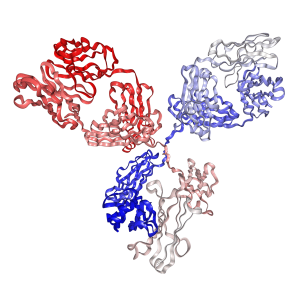
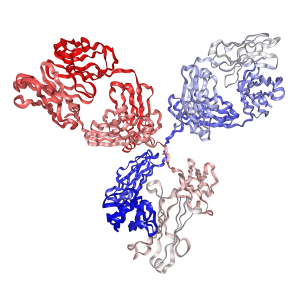
Syd Labs PA008024.m2a 是一款经哺乳动物细胞表达、Protein A 纯化的重组抗 DYKDDDDK / HA 标签双特异性抗体,克隆号为 L1.3 / 12CA5,属小鼠 IgG2a、κ 轻链。该分子的一条抗原结合臂(L1.3)靶向 DYKDDDDK(FLAG)标签,另一条臂(12CA5)靶向流感病毒血凝素来源的 HA 标签(YPYDVPDYA),可在同一分子上同时结合两种不同标签,实现目标蛋白的一步双标签检测与纯化。当目标蛋白同时带有 DYKDDDDK 与 HA 标签时,L1.3 臂能显著提升 12CA5 臂对 HA 标签蛋白的亲和力;即使两种标签位于不同蛋白、不同蛋白复合物或不同细胞表面,该双特异性抗体也可将其桥联到一起。适用场景涵盖 ELISA、流式细胞术、免疫印迹、免疫沉淀、免疫细胞化学、免疫荧光、电镜及蛋白纯化等。
产品参数
| 货号 | PA008024.m2a |
|---|---|
| 产品名称 | 重组抗DYKDDDDK/HA标签双特异性单抗(L1.3/12CA5) | Syd Labs PA008024.m2a |
| 英文名 | Recombinant Anti-DYKDDDDK / HA-Tag Bispecific Antibody, Mouse IgG2a Kappa (clone L1.3 / 12CA5) |
| 供货商名称 | Syd Labs, Inc. |
| 品牌名 | Syd Labs |
| 别称 | DYKDDDDK 标签(FLAG 标签、FLAG tag);HA 标签(HA-Tag、YPYDVPDYA 标签、流感病毒血凝素标签) |
| 克隆号 | L1.3 / 12CA5 |
| 同种型 | 小鼠IgG2a Kappa |
| 来源 | 哺乳动物细胞表达的重组抗体 |
| 反应性 | 人、小鼠、大鼠及其他 |
| 特异性 | 可检测与纯化 DYKDDDDK 融合蛋白,不论该序列位于 N 端、Met N 端、C 端还是融合蛋白内部;同时识别 HA 标签蛋白及 HA 标签表达细胞上、源自流感病毒血凝素(HA)的 9 氨基酸序列 YPYDVPDYA |
| 纯化 | Protein A亲和层析纯化。 |
| 抗体形式 | 0.2 μM 过滤的 1× PBS 溶液 |
| 纯度 | 还原条件下 SDS-PAGE 检测 >95% |
| 运输 | 冰袋运输;收到后请立即按下方推荐温度保存 |
| 稳定性与存储 | 使用手动除霜冰箱,避免反复冻融;解冻后、开盖前请先离心以最大程度回收产品。收到后 2–8°C 可保存 1 个月;-20°C 至 -70°C 可保存 12 个月 |
| 产品咨询 | Syd Labs在国内只通过代理商销售其产品,不做直销。终端用户咨询价格请联系Syd Labs中国代理商。 关于Syd Labs产品如果有任何技术或其它问题,欢迎随时联系Syd Labs国内市场推广合作伙伴:武汉多找找科技有限公司,企业微信:duozhaozhao2024 联系电话:18162581039(龙经理) |
| 应用详情 | ELISA、流式细胞术、免疫印迹、免疫沉淀、免疫细胞化学、免疫荧光、染色质免疫沉淀、电子显微镜、超迁移实验(supershift assay)、与琼脂糖或磁珠偶联后的蛋白纯化,以及同型对照 |
文献
PA008024.m2a: Syd Labs 重组抗DYKDDDDK/HA标签双特异性单克隆抗体(L1.3/12CA5) ,小鼠IgG2a Kappa(Recombinant Anti-DYKDDDDK / HA-Tag Bispecific Antibody, Mouse IgG2a Kappa (clone L1.3 / 12CA5))
重组抗DYKDDDDK/HA标签双特异性单抗(L1.3/12CA5)背景知识:
DYKDDDDK(FLAG)标签:由八肽 Asp-Tyr-Lys-Asp-Asp-Asp-Asp-Lys 构成,1988 年由 Hopp 等设计,因富含天冬氨酸与酪氨酸而高度亲水、分子量小,对融合蛋白的结构和生物活性影响极小,并可用肠激酶切除。抗 FLAG M2 抗体可识别位于 N 端、Met N 端、C 端或内部的该序列,本产品 L1.3 臂与该表位一致。
HA 标签:源自人流感病毒血凝素第 98–106 位氨基酸的九肽 YPYDVPDYA,是应用最广泛的表位标签之一;克隆 12CA5 是最早开发、被大量文献引用的抗 HA 标签抗体,同样可识别 N 端、C 端或内部的 HA 序列。
双特异性设计:本产品采用 1+1 不对称 IgG 结构,一条臂为抗 DYKDDDDK 的 L1.3,另一条臂为抗 HA 的 12CA5,从而把两种常用标签的检测能力整合到单一分子。相比把两种单特异性抗体简单混合,单一双特异性分子可同时占据两个标签,形成”一抗双标”的稳定桥联。
亲和力协同:当同一目标蛋白同时带有 DYKDDDDK 与 HA 标签时,L1.3 臂与 DYKDDDDK 的结合可显著提高 12CA5 臂对 HA 标签蛋白的亲和力;两种标签即使分布在不同的蛋白、蛋白复合物甚至不同细胞上,该抗体也能将其拉近到一起,适合研究蛋白互作与复合物组成。
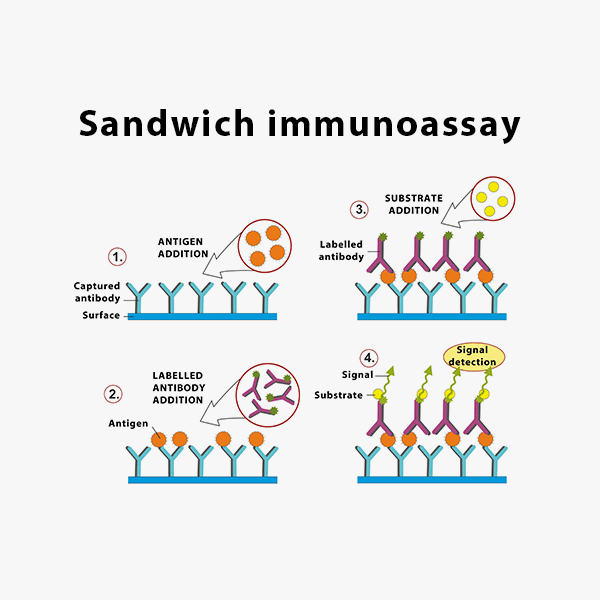
应用与用途:得益于上述双靶特性,该抗体可用于 ELISA、流式细胞术、免疫印迹、免疫沉淀、免疫荧光、染色质免疫沉淀、电镜与超迁移实验,并可偶联琼脂糖或磁珠用于 DYKDDDDK 融合蛋白的亲和纯化,以及作为小鼠 IgG2a 同型对照使用。
重组抗DYKDDDDK/HA标签双特异性单抗(L1.3/12CA5)部分参考文献:
1. A Short Polypeptide Marker Sequence Useful for Recombinant Protein Identification and Purification Thomas P. Hopp,et al.Bio/Technology. 1988;6:1204-1210.DOI: 10.1038/nbt1088-1204 “A small hydrophilic peptide of eight amino acids (AspTyrLysAspAspAspAspLys) was engineered onto the N-terminus of a variety of recombinant lymphokines for the purpose of aiding in their detection and purification from yeast supernatants or E. coli extracts. An antibody specific for the first four amino acids of this sequence was used as a detection reagent and for immunoaffinity purification of products under mild conditions. Because of the small size of the peptide moiety and its hydrophilic nature, the proteins were unaffected by its presence and retained a high level of biological activity. In addition, it was possible to remove the peptide via an enzymatic cleavage procedure using enterokinase.”
2. The structure of an antigenic determinant in a protein Ian A. Wilson,et al.Cell. 1984;37(3):767-778.DOI: 10.1016/0092-8674(84)90412-4 “The immunogenic and antigenic determinants of a synthetic peptide and the corresponding antigenic determinants in the parent protein have been elucidated. Four determinants have been defined by reactivity of a large panel of antipeptide monoclonal antibodies with short, overlapping peptides (7-28 amino acids), the immunizing peptide (36 amino acids), and the intact parent protein (the influenza virus hemagglutinin, HA). The majority of the antipeptide antibodies that also react strongly with the intact protein recognize one specific nine amino acid sequence. This immunodominant peptide determinant is located in the subunit interface in the HA trimeric structure. The relative inaccessibility of this site implies that antibody binding to the protein is to a more unfolded HA conformation. This antigenic determinant differs from those previously described for the hemagglutinin and clearly demonstrates the ability of synthetic peptides to generate antibodies that interact with regions of the protein not immunogenic or generally accessible when the protein is the immunogen.”
3. Epitope tagging: general method for tracking recombinant proteins Christian E. Fritze,et al.Methods Enzymol. 2000;327:3-16.PMID: 11044970 “Epitope tagging is a procedure whereby a short amino acid sequence recognized by a preexisting antibody is attached to a protein under study to allow its recognition by the antibody in a variety of in vitro or in vivo settings. The advantage of epitope tagging is that the time and expense associated with generating and characterizing antibodies against multiple proteins are obviated. However, it offers a number of additional advantages such as it allows tracking of closely related proteins without fear of spurious results resulting from cross-reactive antibodies. The intracellular location of epitope-tagged proteins can be identified in immunofluorescence experiments in a similarly well-controlled manner, without fear of cross-reactivity with the endogenous protein. The epitope-tagging approach may be particularly useful for discriminating among otherwise similar gene products that cannot be distinguished with conventional antibodies. For example, epitope tagging permits discrimination of individual members of closely related protein families or the identification of in vitro-mutagenized variants in the context of endogenous wild-type protein.”
4. Design and production of novel tetravalent bispecific antibodies M. Josefina Coloma,et al.Nat Biotechnol. 1997;15(2):159-163.DOI: 10.1038/nbt0297-159 “We have produced novel bispecific antibodies by fusing the DNA encoding a single chain antibody (ScFv) after the C terminus (CH3-ScFv) or after the hinge (Hinge-ScFv) with an antibody of a different specificity. The fusion protein is expressed by gene transfection in the context of a murine variable region. Transfectomas secrete a homogeneous population of the recombinant antibody with two different specificities, one at the N terminus (anti-dextran) and one at the C terminus (anti-dansyl). The CH3-ScFv antibody, which maintains the constant region of human IgG3, has some of the associated effector functions such as long half-life and Fc receptor binding. The Hinge-ScFv antibody which lacks the CH2 and CH3 domains has no known effector functions.”
5. Epitope tagging of recombinant proteins B. Brizzard,et al.Curr Protoc Neurosci. 2001;Chapter 5:Unit 5.8.PMID: 18428506 “Epitope tagging is a method of expressing proteins whereby an epitope for a specific monoclonal antibody is fused to a target protein using recombinant DNA techniques. The fusion gene is cloned into an appropriate expression vector for the experimental cell type and host cells are transfected. The fusion protein can then be detected and/or purified using a monoclonal antibody specific for the epitope tag. This unit presents protocols for detection and purification of proteins tagged with a particular epitope, the FLAG tag, although the same general approach can be applied to other epitope tags. The protocols in this unit employ the anti-FLAG M2 antibody to detect and purify FLAG-tagged proteins. The methods presented are immunoprecipitation of FLAG fusion proteins from cells using an anti-FLAG M2 affinity gel, detection of FLAG fusion proteins by western blotting, and purification of FLAG fusion proteins by anti-FLAG M2 affinity chromatography.”