
重组抗小鼠SIRPA单抗(MY-1) | Syd Labs PA007638.r2a
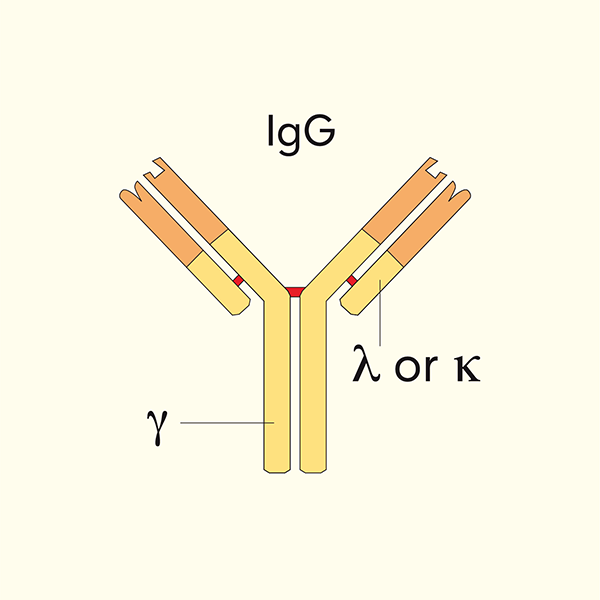
Syd Labs体内实验级重组抗小鼠 SIRPA 单克隆抗体,克隆号 MY-1,恒定区为大鼠 IgG2a Kappa(Rat IgG2a Kappa),由哺乳动物细胞重组表达。SIRPA 又称 SHPS-1(SHP substrate-1/SHP底物蛋白-1)、SIRPα(信号调节蛋白α)、CD172a、BIT(脑Ig样分子酪氨酸激酶底物)、P84、Myd-1(髓样分化抗原-1)、Ptpns1(蛋白酪氨酸磷酸酶非受体型底物1)、Shps1、Sirp,是一种约 85–90 kDa I 型跨膜糖蛋白(基因名 Sirpa/Ptpns1,小鼠2号染色体、人类20号染色体20p13),胞外从 N 端依次为 1 个 Ig-V 样结构域(配体结合区)、2 个 Ig-C1 样结构域;胞浆区含两个免疫受体酪氨酸抑制基序(ITIM),磷酸化后可招募含 SH2 结构域的酪氨酸磷酸酶 SHP-1 和 SHP-2,传递抑制性信号。SIRPA 主要组成性表达于髓系细胞(巨噬细胞、单核细胞、树突状细胞、中性粒细胞)以及神经元细胞表面,是CD47(整合素相关蛋白/IAP,”别吃我”配体)的主要受体。CD47 在正常细胞(红细胞、血小板、淋巴细胞)和多种肿瘤细胞表面广泛表达,与巨噬细胞表面 SIRPA 结合后通过 SHP-1/2 磷酸酶抑制吞噬突触中肌球蛋白 IIA 积累,向巨噬细胞传递”别吃我(Don’t eat me)”信号,从而阻止对自身细胞的吞噬;肿瘤细胞通过高表达 CD47 激活该通路实现免疫逃逸。MY-1 是经典的大鼠抗小鼠 SIRPα 单克隆抗体(大鼠 IgG2aκ),可识别 SIRPα 胞外 Ig-V 样结构域、阻断 CD47-SIRPα 相互作用,同时也可交叉识别 SIRPβ1(与 DAP12 结合的活化型 SIRP 家族成员),体内外广泛用于阻断 CD47-SIRPα”别吃我”信号、增强巨噬细胞吞噬与杀伤、肿瘤免疫治疗、巨噬细胞重编程、自身免疫及造血研究。本品经 Protein G 亲和纯化,还原性 SDS-PAGE 及 HPLC 检测纯度>95%,LAL 法内毒素<1 EU/mg,0.2 μM 过滤于 pH 7.4、不含稳定剂或防腐剂的 1× PBS 溶液,适用于 ELISA、中和/阻断实验、功能实验(如生物分析 PK 与 ADA 检测)以及受小鼠 SIRPA 蛋白影响的生物学通路研究和体内动物实验。
产品参数
| 货号 | PA007638.r2a |
|---|---|
| 产品名称 | 重组抗小鼠SIRPA单抗(MY-1) | Syd Labs PA007638.r2a |
| 英文名 | In Vivo Grade Recombinant Anti-mouse SIRPA Monoclonal Antibody (Clone: MY-1), Rat IgG2a Kappa |
| 供货商名称 | Syd Labs, Inc. |
| 品牌名 | Syd Labs |
| 别称 | SHPS-1(SHP substrate-1,SHP底物蛋白-1)、SIRPα(信号调节蛋白α/Signal regulatory protein alpha)、CD172a、BIT(脑Ig样分子酪氨酸激酶底物/Brain Ig-like molecule with tyrosine-based activation motifs)、P84、Myd-1(髓样分化抗原-1/Myeloid differentiation antigen-1)、Ptpns1(蛋白酪氨酸磷酸酶非受体型底物1/Tyrosine-protein phosphatase non-receptor type substrate 1)、Shps1、Sirp |
| 克隆号 | MY-1 |
| 同种型 | 大鼠 IgG2a Kappa |
| 特异性 | 该体内实验级重组大鼠单克隆抗体(克隆号 MY-1)特异性结合小鼠 SIRPA,并可交叉识别 SIRPβ1 |
| 抗体形式 | 0.2 μM 过滤的溶液,pH 7.4,不含稳定剂或防腐剂 |
| 内毒素 | LAL 法测定,低于每 1 mg 蛋白 1 EU |
| 纯度 | 还原性条件下 SDS-PAGE 及 HPLC 检测>95% |
| 运输 | 采用冰袋运输;收到后请立即按下方推荐温度保存 |
| 稳定性与存储 | 使用手动除霜冰箱,避免反复冻融;自收货之日起 12 个月,按供货状态于 −20 ℃ 至 −70 ℃ 保存;自收货之日起 1 个月,按供货状态于 2 ℃ 至 8 ℃ 保存 |
| 产品咨询 | Syd Labs在国内只通过代理商销售其产品,不做直销。终端用户咨询价格请联系Syd Labs中国代理商。 关于Syd Labs产品如果有任何技术或其它问题,欢迎随时联系Syd Labs国内市场推广合作伙伴:武汉多找找科技有限公司,企业微信:duozhaozhao2024 联系电话:18162581039(龙经理) |
| 应用详情 | ELISA、中和/阻断实验、功能实验(如生物分析 PK 与 ADA 检测),以及研究受小鼠 SIRPA 蛋白影响的生物学通路的实验,可用于体内动物实验 |
文献
PA007638.r2a: Syd Labs 重组抗小鼠SIRPA单克隆抗体(克隆号MY-1) ,体内实验级重组,大鼠 IgG2a Kappa(In Vivo Grade Recombinant Anti-mouse SIRPA Monoclonal Antibody (Clone: MY-1), Rat IgG2a Kappa)
重组抗小鼠SIRPA单抗(MY-1)背景知识:
SIRPA(Signal regulatory protein α,信号调节蛋白α)是 SIRP 家族(SIRPα、SIRPβ1、SIRPγ、SIRPβ2、SIRPδ)中研究最深入的抑制性受体,最初由多个研究组独立发现并命名:
SHPS-1(SHP substrate-1,SHP底物蛋白-1):因胞内 ITIM 磷酸化后可结合并激活蛋白酪氨酸磷酸酶 SHP-1/SHP-2 而得名;
BIT(Brain Ig-like molecule with tyrosine-based activation motifs):从脑组织中克隆的 Ig 样跨膜分子;
P84:因 SDS-PAGE 分子量约 84 kDa 而得名;
Myd-1(Myeloid differentiation antigen-1):髓系细胞分化相关表面抗原;
Ptpns1(Protein tyrosine phosphatase non-receptor type substrate 1):基因名;
CD172a:人类白细胞分化抗原统一编号。
SIRPA 为约 85–90 kDa I 型跨膜糖蛋白,胞外区从 N 端依次为:1 个 Ig-V 样结构域(负责与配体 CD47 结合的核心区)、2 个 Ig-C1 样结构域(SIRP 家族保守区);跨膜区后为长胞质尾,含两个典型 ITIM 基序(V/IxYxxL/V),当 SIRPα 与 CD47 结合后,ITIM 酪氨酸被 Src 家族激酶磷酸化,招募并激活 SHP-1/SHP-2 磷酸酶,通过使下游底物(如肌球蛋白IIA、吞噬相关激酶)去磷酸化,抑制吞噬突触形成,传递”别吃我”抑制信号。
SIRPA 的表达具有明显的细胞类型特异性:主要高表达于髓系细胞(单核/巨噬细胞、树突状细胞、中性粒细胞、髓系来源抑制细胞 MDSC)、部分神经元细胞;T 细胞、B 细胞、NK 细胞上表达极低或不表达。这种髓系限制性表达使其成为巨噬细胞/DC 鉴定的重要表面标志,也是靶向肿瘤免疫治疗时对淋巴细胞影响较小的先天免疫检查点。
重组抗小鼠SIRPA单抗(MY-1)部分参考文献:
1. Anticancer efficacy of monotherapy with antibodies to SIRPα/SIRPβ1 mediated by induction of antitumorigenic macrophages.
Sakamoto M, Iyori T, Togi S, Murata S, Yamada K, Uchida K, Yoshida H, Naito M, Hatta T, Takeda H, Takahashi M, Seya T, Matsumoto M
Proc Natl Acad Sci U S A. 2022 Jan 4;119(1):e2109923118. PMCID: PMC8740918 PMID: 34969848 DOI: 10.1073/pnas.2109923118
“The interaction between signal regulatory protein α (SIRPα), an inhibitory receptor expressed on macrophages, and CD47 on cancer cells is thought to prevent antibody-dependent cellular phagocytosis (ADCP) of the latter by the former. Blockade of this interaction in combination with tumor-targeting monoclonal antibodies (mAbs) has been shown to suppress tumor formation by promoting macrophage-mediated ADCP. Here we show that monotherapy with mAbs, including MY-1, that bind to both SIRPα and SIRPβ1, an activating receptor on myeloid cells, markedly suppressed the formation of tumors by MBT2 and MB49 mouse bladder cancer cells or FM3A mouse breast cancer cells in immunocompetent syngeneic mice and prolonged the survival of the animals. The anticancer effect of MY-1 was largely dependent on macrophages and was associated with stimulation of macrophage-mediated tumor cell killing, but it was not dependent on ADCP, given that these cancer cells do not express SIRPα and MY-1 did not promote phagocytosis in short-term culture. The tumor-infiltrating macrophages in MY-1-treated mice manifested a shift toward a proinflammatory (M1-like) phenotype with increased production of TNF-α, and genetic ablation of SIRPβ1 in macrophages attenuated the stimulatory effect of MY-1 on cancer cell killing. Our results thus suggest that mAbs targeting both SIRPα and SIRPβ1 warrant further investigation as potential anticancer agents.”
2.Role of CD47 as a marker of self on red blood cells.
Oldenborg PA, Zheleznyak A, Fang YF, Lagenaur CF, Gresham HD, Lindberg FP
Science. 2000 Jun 16;288(5473):2051–2054. PMID: 10821274 DOI: 10.1126/science.288.5473.2051
“Red blood cells (RBCs) from CD47-deficient (CD47−/−) mice were rapidly cleared from the circulation of wild-type (WT) mice by splenic red pulp macrophages, whereas RBCs from WT mice survived normally in CD47−/− mice. CD47−/− RBCs were also rapidly cleared from WT mice when transfused, and this clearance was prevented by prior depletion of macrophages. CD47 expressed on RBCs was found to bind to the inhibitory receptor signal regulatory protein α (SIRPα) on macrophages, and this interaction was required for inhibition of phagocytosis. These results indicate that CD47 functions as a molecular marker of self on RBCs and that its interaction with SIRPα on macrophages provides a ‘don’t eat me’ signal that prevents phagocytosis of autologous RBCs.”
3.CD47-signal regulatory protein α (SIRPα) regulates Fcγ and complement receptor–mediated phagocytosis.
Oldenborg PA, Gresham HD, Lindberg FP
J Exp Med. 2001 Apr 2;193(7):855–862. PMCID: PMC2193408 PMID: 11283158 DOI: 10.1084/jem.193.7.855
“In autoimmune hemolytic anemia (AIHA), circulating red blood cells (RBCs) opsonized with autoantibody are recognized by macrophage Fcγ and complement receptors. This triggers phagocytosis and elimination of RBCs from the circulation by splenic macrophages. We recently found that CD47 on unopsonized RBCs binds macrophage signal regulatory protein α (SIRPα), generating a negative signal that prevents phagocytosis of the unopsonized RBCs. We show here that clearance and phagocytosis of opsonized RBCs is also regulated by CD47-SIRPα. The inhibition generated by CD47-SIRPα interaction is strongly attenuated but not absent in mice with only residual activity of the phosphatase Src homology 2 domain-containing protein tyrosine phosphatase (SHP)-1, suggesting that most SIRPα signaling in this system is mediated by SHP-1 phosphatase activity. The macrophage phagocytic response is controlled by an integration of the inhibitory SIRPα signal with prophagocytic signals such as from Fcγ and complement receptor activation. Thus, augmentation of inhibitory CD47-SIRPα signaling may prevent or attenuate RBC clearance in AIHA.”
4.The CD47-signal regulatory protein alpha (SIRPα) interaction is a therapeutic target for human solid tumors.
Willingham SB, Volkmer JP, Gentles AJ, Sahoo D, Dalerba P, Mitra SS, Wang J, Contreras-Trujillo H, Martin R, Cohen JD, Lovelace P, Scheeren FA, Chao MP, Weiskopf K, Tang C, Volkmer AK, Naik TJ, Storm TA, Mosley AR, Koller B, Popoviciu L, Rouse TJ, Glick D, Varghese B, Wang J, Wei J, Ma Y, Underhill MJ, Valkenburg KC, Alizadeh AA, West BL, Liu J, Majeti R, Weissman IL
Proc Natl Acad Sci U S A. 2012 Apr 24;109(17):6662–6667. PMID: 22431619 PMCID: PMC3340036 DOI: 10.1073/pnas.1121623109
“CD47, a ‘don’t eat me’ signal for phagocytic cells, is expressed on the surface of all human solid tumor cells tested, and increased CD47 expression correlates with poor clinical outcome in several human cancers. Anti-CD47 antibodies that disrupt the interaction between CD47 and its receptor SIRPα enabled phagocytosis of solid tumor cells by macrophages in vitro and inhibited tumor growth and metastasis in vivo in xenotransplantation mouse models of human bladder, colon, glioblastoma, and breast cancer. Therapeutic anti-CD47 antibodies also synergized with tumor-specific monoclonal antibodies such as trastuzumab and rituximab to eliminate cancer cells. These findings demonstrate that the CD47-SIRPα interaction is a critical innate immune checkpoint that can be targeted to enable macrophage-mediated destruction of human solid tumors.”