
重组抗小鼠F4/80单抗(F4/80) | Syd Labs PA007640.m1
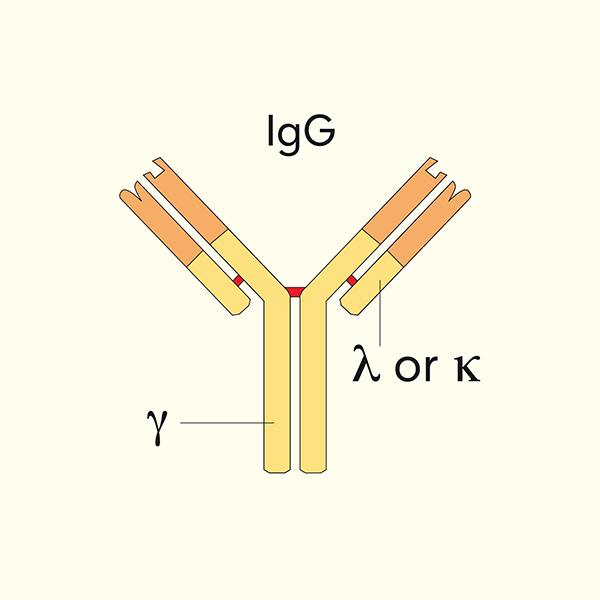
Syd Labs体内实验级重组抗小鼠 F4/80 单克隆抗体,克隆号 F4/80,恒定区为小鼠 IgG1 Kappa(Mouse IgG1 Kappa),由哺乳动物细胞重组表达。F4/80 又称 EMR1(EGF-like module-containing mucin-like hormone receptor-like 1,EGF样模块黏蛋白样激素受体1)、ADGRE1(黏附G蛋白偶联受体E1/Adhesion GPCR E1)、EGF-TM7(EGF-七跨膜家族)、Ly71(淋巴细胞抗原71)、Gpf480、DD7A5-7、TM7LN3,是一种高度糖基化的 I 型跨膜糖蛋白(表观分子量约160 kDa,前体蛋白核心约102 kDa),属于黏附 G 蛋白偶联受体(adhesion GPCR)EGF-TM7/ADGRE 家族(家族成员含 CD97、EMR1-4、FIRE、ETL)。F4/80/EMR1 胞外区从 N 端依次含多个 EGF 样结构域(7个EGF结构域)、黏蛋白样茎区和 GAIN 自水解结构域;跨膜区为典型七次跨膜(TM7)结构,偶联 G 蛋白介导信号传导;胞内 C 端短尾。F4/80 是小鼠成熟组织巨噬细胞最经典、最广泛使用的表面标记,高表达于多种驻留组织巨噬细胞——包括肝脏库普弗细胞(Kupffer cells)、皮肤朗格汉斯细胞(Langerhans cells)、胸腺皮质巨噬细胞、脾脏红髓巨噬细胞、淋巴结髓质巨噬细胞、肺/肠道/腹腔驻留巨噬细胞、骨髓基质巨噬细胞以及中枢神经系统小胶质细胞(microglia);不表达于粒细胞(中性粒细胞、嗜酸性粒细胞)、淋巴细胞(T/B/NK细胞)、血小板和成纤维细胞,是鉴定巨噬细胞系发育成熟度的关键标志。F4/80 克隆是 Austyn & Gordon 于1981年首次报道的小鼠巨噬细胞特异性单抗,是整个巨噬细胞生物学领域使用最广、被引最多的标志性抗体之一,广泛用于流式细胞术鉴定巨噬细胞亚群、免疫组化/免疫荧光检测组织中巨噬细胞浸润、体内巨噬细胞剔除/功能阻断、肿瘤相关巨噬细胞(TAM)研究、炎症/自身免疫/感染模型中巨噬细胞动力学研究,以及诱导CD8⁺ T细胞外周耐受等功能研究。本品经 Protein G 亲和纯化,还原性 SDS-PAGE 及 HPLC 检测纯度>95%,LAL 法内毒素<1 EU/mg,0.2 μM 过滤于 pH 7.4、不含稳定剂或防腐剂的 1× PBS 溶液,适用于 ELISA、功能实验(如生物分析 PK 与 ADA 检测)以及受小鼠 F4/80 蛋白影响的生物学通路研究和体内动物实验。
产品参数
| 货号 | PA007640.m1 |
|---|---|
| 产品名称 | 重组抗小鼠F4/80单抗(F4/80) | Syd Labs PA007640.m1 |
| 英文名 | In Vivo Grade Recombinant Anti-mouse F4/80 Monoclonal Antibody (Clone: F4/80), Mouse IgG1 Kappa |
| 供货商名称 | Syd Labs, Inc. |
| 品牌名 | Syd Labs |
| 别称 | ADGRE1(黏附G蛋白偶联受体E1/Adhesion GPCR E1)、EMR1(EGF样模块黏蛋白样激素受体1/EGF-like module-containing mucin-like hormone receptor-like 1)、EGF-TM7(EGF-七跨膜家族)、Ly71(淋巴细胞抗原71/Lymphocyte antigen 71)、Gpf480、DD7A5-7、TM7LN3 |
| 克隆号 | F4/80 |
| 同种型 | 小鼠 IgG1 Kappa |
| 特异性 | 该体内实验级重组单克隆抗体(克隆号 F4/80)特异性结合小鼠 F4/80(EMR1/ADGRE1)分子,识别小鼠成熟巨噬细胞表面 160 kDa 糖蛋白抗原 |
| 抗体形式 | 0.2 μM 过滤的溶液,pH 7.4,不含稳定剂或防腐剂 |
| 内毒素 | LAL 法测定,低于每 1 mg 蛋白 1 EU |
| 纯度 | 还原性条件下 SDS-PAGE 及 HPLC 检测>95% |
| 运输 | 采用冰袋运输;收到后请立即按下方推荐温度保存 |
| 稳定性与存储 | 使用手动除霜冰箱,避免反复冻融;自收货之日起 12 个月,按供货状态于 −20 ℃ 至 −70 ℃ 保存;自收货之日起 1 个月,按供货状态于 2 ℃ 至 8 ℃ 保存 |
| 产品咨询 | Syd Labs在国内只通过代理商销售其产品,不做直销。终端用户咨询价格请联系Syd Labs中国代理商。 关于Syd Labs产品如果有任何技术或其它问题,欢迎随时联系Syd Labs国内市场推广合作伙伴:武汉多找找科技有限公司,企业微信:duozhaozhao2024 联系电话:18162581039(龙经理) |
| 应用详情 | ELISA、功能实验(如生物分析 PK 与 ADA 检测),以及研究受小鼠 F4/80 蛋白影响的生物学通路的实验,可用于流式细胞术、免疫组化/免疫荧光及体内动物实验 |
文献
PA007640.m1: Syd Labs 重组抗小鼠F4/80单克隆抗体(克隆号F4/80) ,体内实验级重组,小鼠IgG1 Kappa(In Vivo Grade Recombinant Anti-mouse F4/80 Monoclonal Antibody (Clone: F4/80), Mouse IgG1 Kappa)
重组抗小鼠F4/80单抗(F4/80)背景知识:
F4/80 是 1981 年 Austyn 与 Gordon 在用巯基乙酸盐诱导的小鼠腹腔巨噬细胞免疫大鼠所制备的杂交瘤中发现的一种小鼠巨噬细胞特异性表面抗原(”F4/80″是该杂交瘤克隆最初的编号命名),是整个巨噬细胞生物学研究领域使用最广泛、被引次数最高的标志性分子之一。F4/80 抗原的基因克隆证实其属于 EGF-TM7(Epidermal Growth Factor-Seven Transmembrane)黏附 GPCR 家族,即 ADGRE1(Adhesion G protein-coupled receptor E1,黏附G蛋白偶联受体E1),小鼠基因名 Adgre1(位于17号染色体,人类同源基因 ADGRE1 位于19号染色体19p13.3)。该家族还包括 EMR2/ADGRE2、EMR3/ADGRE3、EMR4/FIRE/ADGRE4、CD97/ADGRE5、ETL/ELTD1/ADGRL4 以及 BAI1、GPR56 等黏附GPCR成员。
F4/80/EMR1 为高度糖基化的 I 型跨膜蛋白:
胞外 N 端:含 7 个 EGF 样结构域(EGF-like domains)、黏蛋白样糖基化茎区(mucin-like stalk)和 GAIN 结构域(GPCR autoproteolysis-inducing domain,自水解结构域,介导黏附GPCR NTF-CTF 剪切);N 端 EGF 结构域中有多个 Ca²⁺ 结合位点,参与细胞-细胞/细胞-基质黏附互作;
跨膜区:典型七次跨膜(TM7)结构域,是 GPCR 经典七次跨膜折叠;
胞内 C 端:短胞质尾,参与胞内信号传导,可偶联 Gαi 类 G 蛋白并与多种胞内信号分子互作;
糖基化修饰:核心多肽链预测分子量约 102 kDa,但由于大量 N-糖基化与 O-糖基化修饰,SDS-PAGE 表观分子量约 160 kDa,故常被描述为 160 kDa 巨噬细胞膜糖蛋白。
F4/80 的表达分布与细胞特异性
F4/80 是小鼠成熟组织巨噬细胞的”金标准”表面标记,其表达具有高度的细胞类型和分化阶段特异性:
阳性细胞群:绝大多数成熟组织驻留巨噬细胞高表达 F4/80,包括肝脏库普弗细胞、皮肤朗格汉斯细胞、肺泡巨噬细胞、脾脏红髓巨噬细胞、淋巴结髓质巨噬细胞、胸腺皮质巨噬细胞、腹腔/胸腔巨噬细胞、肠道固有层巨噬细胞、肾脏间质巨噬细胞、骨髓基质巨噬细胞,以及中枢神经系统小胶质细胞(在大脑小胶质细胞上 F4/80 表达水平较低但可稳定检出);外周血单核细胞在分化为组织巨噬细胞过程中 F4/80 表达逐渐上调;部分树突状细胞亚群也可弱表达 F4/80;
阴性细胞群:T 细胞、B 细胞、NK 细胞等淋巴细胞,中性粒细胞、嗜酸性粒细胞、嗜碱性粒细胞等粒细胞,血小板、成纤维细胞、上皮细胞、内皮细胞均不表达或极弱表达 F4/80;
分化标志:F4/80 在巨噬细胞前体阶段(骨髓单核细胞前体)低表达,随着向成熟组织巨噬细胞分化表达显著上调,因此既是巨噬细胞鉴定标记,也是巨噬细胞成熟度标志;激活状态下 F4/80 表达可发生动态变化(如炎症局部浸润单核细胞分化为 M1 样巨噬细胞时 F4/80 表达可相对下调,M2 样 TAM 通常保持高表达)。
重组抗小鼠F4/80单抗(F4/80)部分参考文献:
1. F4/80, a monoclonal antibody directed specifically against the mouse macrophage.
Austyn JM, Gordon S
Eur J Immunol. 1981;11(10):805–815. PMID: 7308760 DOI: 10.1002/eji.1830111013
“A hybridoma clone which secretes a macrophage (MΦ)-specific monoclonal antibody, F4/80, was produced by fusing spleen cells from a rat hyperimmunized with cultured thioglycollate-induced mouse peritoneal MΦ with a mouse myeloma, NS1. Binding of antibody to primary cells and cell lines was detected by radioimmune indirect binding assay, autoradiography or fluorescence-activated cell sorter analysis. F4/80 binds to mouse MΦ from the peritoneal cavity or other sources, blood monocytes, MΦ derived from bone marrow precursors in culture and MΦ-like cell lines, but not to other cells, including polymorphonuclear leukocytes, lymphocytes or fibroblasts. F4/80 does not bind to MΦ via Fc receptors, is not cytotoxic and is of the rat IgG2b subclass. Since F4/80 binds to all MΦ defined by adherence, morphology and immune phagocytosis, it provides a new marker to define the MΦ in the mouse. Large differences in expression of antigen F4/80 were found, depending on intraperitoneal stimulation, time in culture and stage of maturation. Immunoprecipitation experiments demonstrated that the antigen F4/80 is part of a component of Mr 160,000 which is synthesized by the MΦ and, at least in part, exposed on the cell surface.”
2.Peripheral CD8+ T cell tolerance against self and tumor antigens requires the F4/80 molecule.
Lin HH, Faunce DE, Stacey M, Terajewicz A, Nakamura K, Zhang-Hoover J, Kerley M, Mucenski ML, Gordon S, Stein-Streilein J
Nat Med. 2005 Oct;11(10):1113–1119. PMID: 16025118 PMCID: PMC2694648 DOI: 10.1038/nm1279
“F4/80 is a widely used mouse macrophage-restricted cell surface marker and member of the epidermal growth factor–seven transmembrane (EGF-TM7) family of adhesion-G protein-coupled receptors, but its function remains unknown. Here we show that F4/80 is required for the induction of CD8+ T cell peripheral tolerance. F4/80-deficient mice generated by gene targeting failed to develop CD8+ T cell tolerance after administration of soluble antigen or antigen-pulsed antigen-presenting cells, and showed impaired induction of anterior chamber–associated immune deviation (ACAID), a form of peripheral tolerance. F4/80 was required on the antigen-presenting cell, and CD8+ T cells from F4/80-deficient mice were also defective in tolerance induction. Antigen-presenting cells from F4/80-deficient mice produced elevated levels of interleukin-12 (IL-12) after activation, and IL-12 neutralization restored tolerance in F4/80-deficient mice. These findings identify F4/80 as a critical regulator of peripheral CD8+ T cell tolerance through modulation of antigen-presenting cell function, and suggest a new class of therapeutic targets for tolerance induction in autoimmunity and transplantation.”
3.F4/80 and the related adhesion-GPCRs.
Gordon S, Hamann J, Lin HH, Stacey M
Eur J Immunol. 2011 Sep;41(9):2470–2525. PMID: 21812251 DOI: 10.1002/eji.201141701
“The EGF-TM7 family of adhesion class B seven-transmembrane (7TM) receptors includes CD97, EMR1 (the mouse F4/80 antigen), EMR2, EMR3, EMR4 (FIRE) and ETL. These receptors have a hybrid structure consisting of tandem N-terminal EGF domains coupled to a 7TM region related to the secretin family of G protein-coupled receptors, and are predominantly expressed by cells of the immune system. Here we review key features of these molecules, with particular emphasis on F4/80 (EMR1), the best characterized member of the family and an established mouse macrophage marker for over 30 years. We discuss the expression of F4/80 by distinct macrophage subsets during development, homeostasis and inflammation, and the role of F4/80 in the generation of CD8+ regulatory T cells and peripheral tolerance. We also consider the biological functions of other EGF-TM7 family members (CD97, EMR2-4) in leukocyte adhesion, migration, and activation, and highlight emerging roles for adhesion-GPCRs in immune regulation.”
4.Adhesion GPCRs as Modulators of Immune Cell Function.
Hamann J, Veninga H, de Groot DM, Visser L, Hofstra CL, Baks TE, Bruijns SC, van Beelen E, van der Horst EH, van der Valk P, de Vries HE, van Lier RA
Handb Exp Pharmacol. 2016;234:137–164. PMID: 27832495 DOI: 10.1007/164_2016_18
“Immune cells express several adhesion G protein-coupled receptors (aGPCRs), including the ADGRE subfamily members EMR1 (F4/80, ADGRE1), EMR2 (ADGRE2), EMR3 (ADGRE3), EMR4 (FIRE, ADGRE4), and CD97 (ADGRE5), the ADGRB subfamily member BAI1 (ADGRB1), and the ADGRG subfamily members GPR56 (ADGRG1), GPR97 (Pb99, ADGRG3), and GPR114 (ADGRG5). Expression of these molecules in hematopoietic stem and progenitor cells, monocytes/macrophages, dendritic cells, granulocytes, and lymphocytes depends on lineage diversification and maturation, making them suitable markers for individual leukocyte subsets (e.g., F4/80 on mouse macrophages). Recent studies revealed intriguing activities of aGPCRs in tolerance induction (EMR1), granulopoiesis (CD97), engulfment of apoptotic cells and bacteria (BAI1), hematopoietic stem cell formation (GPR56), and control of cytotoxicity (GPR56). Here, we review these findings and discuss their biological and translational implications.”