重组抗HIV gp120外域单克隆抗体(PGT128) 人IgG1 Lambda | Syd Labs PA007181
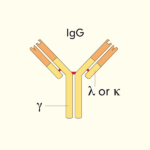
Syd Labs生产的体内实验级重组抗HIV gp120外域单克隆抗体(克隆PGT128)为哺乳动物细胞表达的全长人IgG1 Lambda抗体,由Walker/Burton团队于2011年从非洲精英中和者(IAVI Protocol G Donor 36)分离,是靶向HIV-1 gp120 V3环基部N332糖基超位点(V3-glycan supersite)的经典广谱中和抗体代表成员;重链使用IGHV4-39*07胚系基因,携带长达28个氨基酸的”锤头形”CDRH3,可深入穿透HIV糖基屏障、环抱N332高甘露糖核心并接触V3环GDIR基序(G324/D325/I326/R327)与N301糖基,对约72%跨亚型假病毒具高效中和活性(几何平均IC50约0.02 μg/mL,是早期报道中效价最高的HIV bNAb之一),是解析BG505 SOSIP.664三聚体首个高分辨冷冻电镜结构(PDB 4NCO,Lyumkis 2013)的关键Fab辅助抗体,适用于HIV-1中和实验、Env/SOSIP三聚体结构生物学(含Fab辅助结晶与电镜样品制备)、糖基穿透机制研究、被动免疫/治疗评价及体内外功能实验。
产品参数
| 货号 | PA007181 |
|---|---|
| 产品名称 | 重组抗HIV gp120外域单克隆抗体(PGT128) 人IgG1 Lambda | Syd Labs PA007181 |
| 英文名 | In Vivo Grade Recombinant Anti-HIV GP120 Outer Domain Monoclonal Antibody (Clone PGT128), Human IgG1 Lambda |
| 供货商名称 | Syd Labs, Inc. |
| 品牌名 | Syd Labs |
| 克隆号 | PGT128 |
| 同种型 | 人 IgG1,Lambda |
| 反应性 | HIV-1(跨亚型,约 72% 假病毒被中和,几何平均 IC50 约 0.02 μg/mL) |
| 特异性 | HIV gp120 外域 / V3环糖基超位点(V3-loop glycan supersite,N332-centered,糖基依赖) |
| 抗体形式 | 0.2 μm 过滤的 1× PBS 溶液 |
| 内毒素 | <1 EU/mg(LAL 法测定) |
| 纯度 | >95%(还原性 SDS-PAGE) |
| 运输 | 冰袋运输,收到后请立即按推荐条件储存 |
| 稳定性与存储 | 使用手动除霜冰箱并避免反复冻融循环。2-8℃自收到之日起可保存1个月;-20℃至-70℃自收到之日起可保存12个月,建议分装保存 |
| 产品咨询 | Syd Labs在国内只通过代理商销售其产品,不做直销。终端用户咨询价格请联系Syd Labs中国代理商。 关于Syd Labs产品如果有任何技术或其它问题,欢迎随时联系Syd Labs国内市场推广合作伙伴:武汉多找找科技有限公司,企业微信:duozhaozhao2024 联系电话:18162581039(龙经理) |
| 应用详情 | ELISA、Western blot、免疫组化(IHC)、流式细胞术(FC)、HIV-1中和实验、Env/SOSIP三聚体结晶/冷冻电镜结构生物学(常用作Fab辅助抗体)、糖基屏障穿透机制研究、SHIV/人源化小鼠被动免疫评价及多种体内外功能实验 |
文献
重组抗HIV gp120外域单克隆抗体(PGT128) 人IgG1 Lambda,体内实验级(In Vivo Grade Recombinant Anti-HIV GP120 Outer Domain Monoclonal Antibody (Clone PGT128), Human IgG1 Lambda)
重组抗HIV gp120外域单克隆抗体背景知识:
HIV-1 包膜糖蛋白 Env 三聚体表面覆盖着约 90 个 N-连接糖基,形成致密的”糖基屏障”(glycan shield),是病毒逃逸体液免疫的主要机制之一。gp120 V3环基部以保守N332为核心的高甘露糖簇是HIV-1最易被广谱中和抗体靶向的”超位点”(supersite)之一:该位点既能结合2G12、PGT121/10-1074,也是PGT128、PGT127、PGT130等抗体的共同靶标。在这些抗体中,PGT128以其极长的CDRH3、极高的中和效价以及对糖盾的”穿透式”识别模式而成为糖基类bNAb的经典模型分子。
克隆PGT128由Burton团队Laura Walker等于2011年从一名非洲精英中和者(IAVI Protocol G Donor 36,与PGT121家族来自同一供者)中分离,是当时报道中效价最高的HIV广谱中和抗体之一——在162株跨亚型假病毒组中约72%可被中和,几何平均IC50约0.02 μg/mL,比当时已有的VRC01、PG9/PG16均高出约一个数量级。同年Pejchal等在Science上解析了PGT128的结构(PDB 3TYG),揭示其重链使用IGHV4-39*07胚系基因、携带长达28个氨基酸的CDRH3,折叠成”锤头”(hammerhead)构象,从糖基缝隙中插入并穿透糖盾,顶端以β-发夹环抱N332高甘露糖的Manα1-2Man末端,同时以CDRH3/CDRH2接触V3环GDIR基序与N301糖基——这种”长环穿透+糖基环抱+蛋白骨架接触”的三元件识别模式,为理解抗体如何突破密集糖基屏障提供了首个原子级原型。
PGT128对HIV Env结构生物学的贡献尤为突出:2013年Lyumkis等在Science发表BG505 SOSIP.664三聚体的首个高分辨冷冻电镜结构(PDB 4NCO,整体分辨率约5.8/4.7 Å),即通过PGT128 Fab与35O22 Fab同时结合三聚体以固定闭合态构象,首次在冷冻电镜下展示了全长糖基化Env三聚体的整体形貌、糖基屏障排布及两个bNAb在三聚体上的精确结合角度,为后续晶体学与冷冻电镜联用、高分辨SOSIP结构解析、以及基于SOSIP的疫苗设计(如BG505 SOSIP免疫原)奠定了关键技术与结构基础。2014年Sok等在PNAS上进一步系统比较了BG505 SOSIP.664与多种bNAb(含PGT128、PGT121、35O22、VRC01、PG9/PG16)的抗原性匹配度,证实PGT128对SOSIP的结合模式与对天然膜上Env一致,是SOSIP免疫原质量评价与抗原性图谱分析的标准试剂。Shingai等2014年J Exp Med工作则显示,PGT128单药或与其他bNAb联用在SHIV感染恒河猴模型中可快速抑制病毒血症,支持其作为被动免疫/治疗候选的临床前价值。
本品为体内实验级(In Vivo Grade)制剂,来源于哺乳动物细胞表达的重组全长人IgG1 Lambda,内毒素低于1 EU/mg、配方为无防腐剂的1× PBS,适合用于HIV-1中和实验、gp120外域/V3糖基超位点识别机制研究、SOSIP/Env三聚体结晶与冷冻电镜结构生物学辅助(Fab固定构象与样品制备)、SHIV感染恒河猴或人源化小鼠体内被动保护/治疗研究,以及需要低内毒素背景的多种体内外功能实验。使用前请根据实验体系确定工作浓度,并避免反复冻融。
重组抗HIV gp120外域单克隆抗体部分参考文献:
1.Broad and potent neutralizing antibodies from an African donor reveal a new HIV-1 vaccine target Laura M Walker,et al.Nature. 2011.PMCID: PMC3195298 “The design of a human immunodeficiency virus type 1 (HIV-1) vaccine that elicits broadly neutralizing antibodies (bNAbs) is a major global health priority. Here we report the isolation and characterization of two new highly potent and broad HIV-1 neutralizing monoclonal antibodies, PGT121 and PGT128, from an African donor (IAVI Protocol G donor 36) whose serum displayed exceptional cross-clade neutralization. PGT128 neutralized 72% of 162 diverse pseudoviruses with a geometric mean IC50 of 0.02 µg/ml, making it one of the most potent anti-HIV-1 bNAbs described to date. Mutagenesis and structural studies reveal that these antibodies bind a glycan-dependent epitope involving the conserved V3-loop base and the N332 glycan on gp120, defining a new supersite of vulnerability on HIV-1. Analysis of polyclonal sera from multiple donors shows that this glycan-dependent V3 site is frequently targeted during natural infection, making it a priority target for HIV-1 vaccine design.”
2. A potent and broad neutralizing antibody recognizes and penetrates the HIV glycan shield Reza Pejchal,et al.Science. 2011.PMCID: PMC3217052 “The surface of the HIV-1 envelope glycoprotein (Env) trimer is protected by a dense shield of N-linked glycans that limits antibody access to the underlying protein. Here we report the crystal structure of the glycan-dependent broadly neutralizing antibody PGT128 in complex with a glycosylated gp120 core at 2.2 Å resolution, which reveals how a 28-residue hammerhead-shaped CDR H3 penetrates the glycan shield to make extensive contacts with both protein and glycan. The elongated CDR H3 inserts between the N332 and N301 high-mannose glycans, cradling the Manα1-2Man terminus of N332 glycan while simultaneously contacting the conserved GDIR sequence at the base of the V3 loop. This structure shows that bNAbs can evolve long CDR loops to penetrate rather than merely recognize the glycan shield, providing a structural paradigm for eliciting glycan-penetrating antibodies by vaccination.”
3. Cryo-EM structure of a fully glycosylated soluble cleaved HIV-1 envelope trimer Dmitry Lyumkis,et al.Science. 2013.PMCID: PMC4074565 “The HIV-1 envelope glycoprotein (Env) trimer is the sole target of neutralizing antibodies and the focus of vaccine design, but its structure has been elusive due to inherent flexibility and heavy glycosylation. Here we report the cryo-electron microscopy (cryo-EM) structure of a fully glycosylated, cleaved soluble trimer (BG505 SOSIP.664) in complex with the antigen-binding fragments (Fabs) of the broadly neutralizing antibodies PGT128 and 35O22 at a resolution of 5.8 Å and a subsequently refined reconstruction at 4.7 Å. The structure reveals a tightly packed prefusion Env trimer in which the three gp120 subunits cap the three gp41 subunits, with interprotomer contacts primarily mediated by V1/V2 and V3 loops, and the glycan shield forming an extensive but not impenetrable canopy over the protein surface. Docking of known crystal structures shows that bNAb epitopes are partially occluded on the closed trimer and suggests mechanisms by which receptor binding triggers opening.”
4. Recombinant HIV envelope trimers derived from a neutralization-resistant clade A virus as candidates for a vaccine that elicits broadly neutralizing antibodies Devin Sok,et al.Proc Natl Acad Sci USA. 2014.PMCID: PMC4143030 “Soluble, cleaved recombinant envelope glycoprotein (Env) trimers that mimic the native viral spike are a leading platform for HIV-1 vaccine development. We describe here the design, antigenicity and structure of BG505 SOSIP.664, a clade A trimer that has been widely used as a prototype native-like Env immunogen. Using a panel of broadly neutralizing antibodies (bNAbs) and non-neutralizing antibodies (non-NAbs), we show that BG505 SOSIP.664 is recognized efficiently by bNAbs PGT128, PGT121, 35O22, VRC01 and PG9/PG16 but is essentially unreactive with non-NAbs that bind misfolded or monomeric Env. Negative-stain EM and x-ray crystallography confirm that the trimer adopts a compact prefusion conformation closely matching the native spike, providing an experimental framework for the use of PGT128 and other bNAbs as antigenicity probes and crystallization chaperones for the structural characterization of native Env trimers.”
5. Passive transfer of modest titers of potent and broadly neutralizing anti-HIV monoclonal antibodies block SHIV infection in macaques Masaru Shingai,et al.J Exp Med. 2014.PMCID: PMC4213103 “Potent and broadly neutralizing antibodies (bNAbs) against HIV-1 are candidates for passive prophylaxis and therapy. Here we assessed the ability of several next-generation bNAbs, including the glycan-dependent antibodies PGT128, 10-1074 and PGT121 as well as CD4-binding-site bNAbs, to protect against and treat SHIV infection in rhesus macaques. At plasma concentrations that are readily achievable clinically (~10-50 µg/ml), single antibody infusions of PGT128, 10-1074 and 3BNC117 blocked high-dose SHIV infection when administered one day before challenge, and PGT128 and 10-1074 also rapidly suppressed viremia in animals with established infection, with suppression maintained for weeks in the absence of antiretroviral therapy. These results demonstrate that modest titers of potent bNAbs are sufficient for robust antiviral activity in vivo and support the clinical development of PGT128-class antibodies for HIV-1 prevention and immunotherapy.”