重组抗HIV gp120外域单克隆抗体(VRC13.01) 人IgG1 Lambda | Syd Labs PA007182
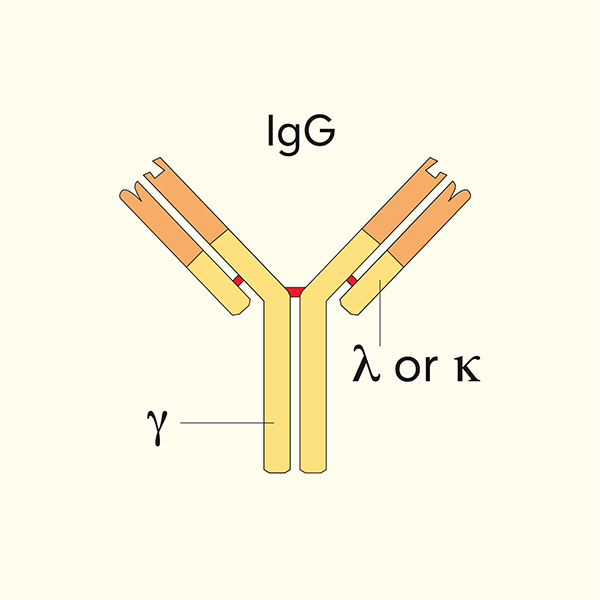
Syd Labs生产的体内实验级重组抗HIV gp120外域单克隆抗体(克隆VRC13.01,全名44-VRC13.01)为哺乳动物细胞表达的全长人IgG1 Lambda抗体,是NIH VRC团队2015年从精英中和者Donor 44分离的非VRC01类CD4结合位点(CD4bs)广谱中和抗体代表成员;重链使用IGHV1-69*01胚系基因,以长CDRH3主导接触gp120外域CD4bs,其识别角度相对VRC01旋转约45°、平移约10 Å,不模拟CD4受体结合,但同样对约82%跨亚型HIV-1流行株具广谱中和活性(含多株VRC01耐药株),Fab/gp120复合物高分辨晶体结构(PDB 4YDJ、4RWY,约2.2–2.3 Å)已解析,适用于HIV-1中和实验、gp120外域CD4bs非经典识别机制研究、Env结构生物学、抗体逃逸突变分析及多种体内外功能实验。
产品参数
| 货号 | PA007182 |
|---|---|
| 产品名称 | 重组抗HIV gp120外域单克隆抗体(VRC13.01) 人IgG1 Lambda | Syd Labs PA007182 |
| 英文名 | In Vivo Grade Recombinant Anti-HIV GP120 Outer Domain Monoclonal Antibody (Clone VRC13.01), Human IgG1 Lambda |
| 供货商名称 | Syd Labs, Inc. |
| 品牌名 | Syd Labs |
| 克隆号 | VRC13.01 |
| 同种型 | 人 IgG1,Lambda |
| 反应性 | HIV-1(跨亚型,约 82% 流行株/假病毒被中和,几何平均 IC50 与 VRC01 相当或更高,并中和部分 VRC01 耐药株) |
| 特异性 | HIV gp120外域CD4结合位点(CD4bs,非VRC01类、CDRH3主导识别) |
| 抗体形式 | 0.2 μm 过滤的 1× PBS 溶液 |
| 内毒素 | <1 EU/mg(LAL 法测定) |
| 纯度 | >95%(还原性 SDS-PAGE) |
| 运输 | 冰袋运输,收到后请立即按推荐条件储存 |
| 稳定性与存储 | 使用手动除霜冰箱并避免反复冻融循环。2-8℃自收到之日起可保存1个月;-20℃至-70℃自收到之日起可保存12个月,建议分装保存 |
| 产品咨询 | Syd Labs在国内只通过代理商销售其产品,不做直销。终端用户咨询价格请联系Syd Labs中国代理商。 关于Syd Labs产品如果有任何技术或其它问题,欢迎随时联系Syd Labs国内市场推广合作伙伴:武汉多找找科技有限公司,企业微信:duozhaozhao2024 联系电话:18162581039(龙经理) |
| 应用详情 | ELISA、Western blot、免疫组化(IHC)、流式细胞术(FC)、HIV-1中和实验、gp120外域/CD4bs识别机制研究、Env结构生物学(结晶辅助与抗原性分析)、抗体逃逸通路分析及多种体内外功能实验 |
文献
重组抗HIV gp120外域单克隆抗体(VRC13.01) 人IgG1 Lambda,体内实验级(In Vivo Grade Recombinant Anti-HIV GP120 Outer Domain Monoclonal Antibody (Clone VRC13.01), Human IgG1 Lambda)
重组抗HIV gp120外域单克隆抗体背景知识:
HIV-1包膜糖蛋白gp120的外域(outer domain)面向病毒外侧,是宿主CD4受体结合的主要区域,也是HIV广谱中和抗体(bNAb)最重要的靶区之一。位于外域上的CD4结合位点(CD4bs)因在不同亚型中高度保守,长期被视为HIV疫苗设计和被动免疫治疗的核心靶标。经典CD4bs bNAb以VRC01为代表,几乎都使用VH1-2胚系、以CDRH2模拟CD4的Phe43残基结合gp120。然而,VH1-2胚系受限、需要长CDRL1绕开N276糖基以及高体细胞突变率,使得VRC01类抗体的疫苗诱导存在一定难度。非VRC01类CD4bs抗体的发现与表征因此对疫苗设计具有重要意义。
克隆VRC13.01(全称44-VRC13.01,简称VRC13)由NIH VRC周同庆、Mascola、Kwong等团队于2015年在Cell上系统报道,是首批被完整结构与功能表征的非VRC01类CD4bs bNAb之一。它来自精英中和者Donor 44,重链使用VH1-69*01胚系基因(而非VRC01类的VH1-2),λ轻链;其识别CD4bs并非通过CDRH2模拟CD4,而是通过一条长CDRH3主导接触gp120外域的CD4bs核心区域。高分辨晶体结构显示,VRC13的接近角度相对VRC01绕CD4bs法线旋转约45°、平移约10 Å,结合界面不与CD4重合,属于真正”不模拟CD4″的CD4bs中和模式。功能上,VRC13在跨亚型假病毒组中约82%被中和,几何平均IC50达到与VRC01相当的亚微克/毫升级水平,并能中和多株对VRC01耐药的病毒株,提示它与VRC01类抗体的逃逸通路存在互补——这一特性在2024年Bricault等的研究中得到进一步证实:VRC13样bNAb应答对应HIV Env上一组以CD4结合环(CD4BL)T359I、N363糖基位点移位(N363→S362)及P369L等突变为核心的独特逃逸通路,与VRC01类抗体的逃逸模式(以D279/K282/N276区域为主)显著不同。
VRC13.01的Fab/gp120复合物晶体结构(PDB 4YDJ与AE株93TH057 gp120,分辨率2.31 Å;PDB 4RWY与core-e-2bH gp120,2.13 Å)为CD4bs非VRC01类识别模式提供了首个原子级原型,被广泛用于HIV-1 Env抗原性图谱、CD4bs抗体组合治疗的互补性评估、抗体逃逸突变预测以及下一代SOSIP/DS-SOSIP免疫原的设计与质量评价中。与VRC01、3BNC117、VRC07-523等VRC01类抗体联用,VRC13可通过覆盖互补逃逸通路降低病毒突破风险,是组合bNAb疗法、SHIV/人源化小鼠被动保护研究以及CD4bs疫苗诱导B细胞谱系分析的常用工具分子。
本品为体内实验级(In Vivo Grade)制剂,来源于哺乳动物细胞表达的重组全长人IgG1 Lambda,内毒素低于1 EU/mg、配方为无防腐剂的1× PBS,适合用于HIV-1中和实验、gp120外域CD4bs非经典识别机制研究、Env结构生物学辅助、抗体逃逸通路分析,以及需要低内毒素背景的多种体内外功能实验(含SHIV恒河猴与人源化小鼠被动保护/治疗研究)。使用前请根据实验体系确定工作浓度,并避免反复冻融。
重组抗HIV gp120外域单克隆抗体部分参考文献:
1.Structural Repertoire of HIV-1-Neutralizing Antibodies Targeting the CD4 Supersite in 14 Donors Tongqing Zhou,et al.Cell. 2015.PMCID: PMC4550938 “The site on the HIV-1 gp120 glycoprotein that binds the CD4 receptor is recognized by broadly reactive antibodies, several of which neutralize over 90% of HIV-1 strains. To understand how antibodies achieve such neutralization, we isolated CD4-binding-site (CD4bs) antibodies and analyzed 16 co-crystal structures-8 determined here-of CD4bs antibodies from 14 donors. The 16 antibodies segregated by recognition mode and developmental ontogeny into two types: CDR H3-dominated and VH-gene-restricted. Both could achieve greater than 80% neutralization breadth, and both could develop in the same donor. From donor 44 we isolated antibody 44-VRC13.01 (VRC13), which derived from the VH1-69 germline gene and used a long heavy-chain CDR H3 to dominate gp120 contacts. VRC13 neutralized 82% of circulating HIV-1 isolates, with an angle of approach rotated ~45° and translated ~10 Å relative to VRC01; unlike VRC01-class antibodies, it did not mimic CD4 recognition. The repertoire for effective recognition of the CD4 supersite thus comprises antibodies with distinct paratopes arrayed about two optimal geometric orientations, one achieved by CDR H3 ontogenies and the other by VH-gene-restricted ontogenies.”
2. Structural definition for a new modality of broad and potent antibody neutralization at the CD4-binding site on HIV-1 gp120 Tongqing Zhou,et al.Retrovirology. 2012.PMCID: PMC3442089 “The initial site of CD4-attachment on HIV-1 gp120 is vulnerable to neutralizing antibodies, and a number of such antibodies have been found that target this site. One set of antibodies, represented by VRC01, mimic CD4 in their recognition and utilize a common V-gene origin (VH1-202). Another set of antibodies, represented by the recently identified VRC13, derives from VH1-6901 and is able to neutralize over 90% of circulating HIV-1 isolates, including isolates resistant to VRC01. To define the mode of recognition used by VRC13, we crystallized its antigen-binding fragment in complex with HIV-1 gp120, from both VRC01-sensitive and VRC01-resistant strains, and determined these X-ray structures. The structure of VRC13 indicates a mode of recognition rotated by 45 degrees and translated ~10 Å from that of VRC01, although both VRC01 and VRC13 utilize similar angles of approach. Unlike VRC01-like antibodies, which feature gp120 contacts primarily in the heavy chain 2nd complementarity determining region (CDR H2), VRC13 utilizes a long heavy chain CDR H3 to contact the CD4-binding site. Overall, the structural details of VRC13 do not mimic those of CD4.”
3. Human Antibodies that Neutralize HIV-1: Identification, Structures, and B Cell Ontogenies Peter D Kwong,John R Mascola.Immunity. 2012/2015.PMCID: PMC4706166 “Antibodies that neutralize diverse strains of HIV-1 develop in approximately 20% of HIV-1-infected individuals, and isolation and structural characterization of these antibodies is revealing how they recognize the envelope glycoprotein spike. Broadly reactive neutralizing antibodies utilize just a few sites of spike vulnerability and converge on select modes of recognition. These antibodies have unusual features: uncommonly long complementarity-determining loops, extensive somatic mutation, or both. CD4-binding-site antibodies segregate into at least two classes: VRC01-class antibodies that use VH1-2 and mimic CD4, and non-VRC01-class antibodies such as VRC13 that use alternative germline genes (e.g., VH1-69) and achieve potent neutralization via long CDR H3-dominated recognition. Recent advances in deep sequencing are providing genetic records of antibody development that inform vaccine design aimed at eliciting these distinct classes of broadly neutralizing antibodies.”
4. A VRC13-like bNAb response is associated with complex escape pathways in HIV-1 envelope Kshitij Wagh,et al.mBio. 2024.PMCID: PMC10949433 “The rational design of HIV-1 immunogens to trigger broadly neutralizing antibodies (bNAbs) requires understanding viral evolutionary pathways. An acute HIV-1-infected individual exhibiting >50% plasma neutralization breadth developed neutralizing antibody specificities against the CD4-binding site (CD4bs) and V1V2 regions. Pseudoviruses derived from early and late autologous env sequences demonstrated >2 log resistance to VRC13 but not to other CD4bs-specific bNAbs. Mapping showed the CD4-binding loop (CD4BL) specifically conferred resistance to VRC13. Complete resistance to VRC13 was achieved through cooperative single amino acid changes within and immediately adjacent to the CD4BL, including T359I, exchange of a potential N-linked glycosylation site from N363 to S362, and P369L. These data characterize complex HIV-1 env evolution in response to VRC13-like bNAbs and identify VRC13-associated escape mutations distinct from those observed with VRC01-class antibodies, which are relevant to lineage-based immunogen design.”
5. Trimeric HIV-1-Env Structures Define Glycan Shields from Clades A, B, and G Guillaume B E Stewart-Jones,et al.Cell. 2016.PMCID: PMC5543418 “The HIV-1-envelope (Env) trimer is covered by a glycan shield of about 90 N-linked carbohydrates that comprises nearly half of the trimer’s mass. Here we report crystal structures and cryo-EM reconstructions of soluble cleaved (SOSIP) Env trimers from clades A, B and G. Antigenic profiling with a panel of bNAbs, including the CDR H3-dominated CD4bs antibody VRC13 as well as VRC01, PGT128 and 35O22, shows that native-like SOSIP trimers from multiple clades accurately present the CD4 supersite and are recognized by VRC13 with angles of approach and affinities comparable to those observed on membrane-extracted Env, supporting the use of VRC13 as a probe for native-like CD4bs antigenicity on stabilized Env immunogens across clades.”