重组抗HIV gp120-gp41界面单克隆抗体(35O22) 人IgG1 Lambda | Syd Labs PA007180
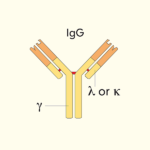
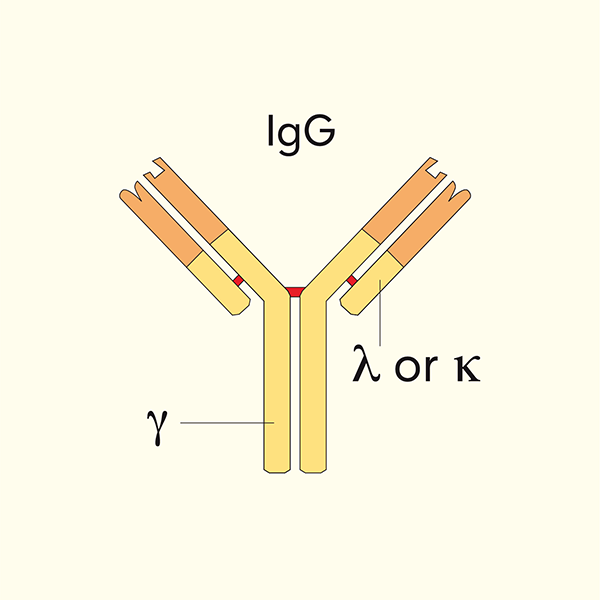
Syd Labs生产的体内实验级重组抗HIV gp120-gp41界面单克隆抗体(克隆35O22)为哺乳动物细胞表达的全长人IgG1 Lambda抗体,是首个被系统鉴定靶向HIV-1 Env三聚体gp120-gp41界面的广谱中和抗体(bNAb)代表成员,使用IGHV1-18*02胚系基因,以高度糖基依赖方式结合已被furin蛋白酶正确切割的天然闭合态三聚体上由gp120 C1/C5段、gp41七肽重复HR1与融合肽近端区域,以及N88(gp120)与N625(gp41)两个关键N-糖基共同构成的保守四元表位;对181株跨亚型假病毒约62%具中和活性,中位IC50低至0.033 μg/mL,是解析BG505 SOSIP.664等Env三聚体原子分辨结构(PDB 4TVP,3.5/3.1 Å)的关键工具抗体,适用于HIV-1中和实验、SOSIP/Env三聚体结构生物学、糖基依赖性识别研究及体内外功能实验。
产品参数
| 货号 | PA007180 |
|---|---|
| 产品名称 | 重组抗HIV gp120-gp41界面单克隆抗体(35O22) 人IgG1 Lambda | Syd Labs PA007180 |
| 英文名 | In Vivo Grade Recombinant Anti-HIV gp120-gp41 Interface Monoclonal Antibody (Clone 35O22), Human IgG1 Lambda |
| 供货商名称 | Syd Labs, Inc. |
| 品牌名 | Syd Labs |
| 克隆号 | 35O22 |
| 同种型 | 人 IgG1,Lambda |
| 反应性 | HIV-1(跨亚型,约 62% 假病毒被中和,中位 IC50 约 0.033 μg/mL) |
| 特异性 | HIV gp120-gp41 界面(gp120-gp41 interface),高度糖基依赖 |
| 抗体形式 | 0.2 μm 过滤的 1× PBS 溶液 |
| 内毒素 | <1 EU/mg(LAL 法测定) |
| 纯度 | >95%(还原性 SDS-PAGE) |
| 运输 | 冰袋运输,收到后请立即按推荐条件储存 |
| 稳定性与存储 | 使用手动除霜冰箱并避免反复冻融循环。2-8℃自收到之日起可保存1个月;-20℃至-70℃自收到之日起可保存12个月,建议分装保存 |
| 产品咨询 | Syd Labs在国内只通过代理商销售其产品,不做直销。终端用户咨询价格请联系Syd Labs中国代理商。 关于Syd Labs产品如果有任何技术或其它问题,欢迎随时联系Syd Labs国内市场推广合作伙伴:武汉多找找科技有限公司,企业微信:duozhaozhao2024 联系电话:18162581039(龙经理) |
| 应用详情 | ELISA、Western blot、免疫组化(IHC)、流式细胞术(FC)、HIV-1 中和实验、Env/SOSIP 三聚体结晶与结构生物学(常用作结晶辅助抗体)、糖基依赖性识别机制研究及多种体内外功能实验 |
文献
重组抗HIV gp120-gp41界面单克隆抗体(35O22) 人IgG1 Lambda,体内实验级(In Vivo Grade Recombinant Anti-HIV gp120-gp41 Interface Monoclonal Antibody (Clone 35O22), Human IgG1 Lambda)
重组抗HIV gp120-gp41界面单克隆抗体背景知识:
HIV-1 包膜糖蛋白 Env 以三个 gp120-gp41 异二聚体构成的三聚体形式存在于病毒表面,负责 CD4/共受体识别与膜融合。gp120-gp41 界面是一类高度保守、但仅在融合前闭合态、被 furin 正确切割的天然三聚体上完整呈现的构象性易感位点;它跨越 gp120 与 gp41 两个亚基,包含多个保守 N-糖基化位点,是 HIV 广谱中和抗体(bnAb)中最晚被定义、同时也是疫苗设计和抗体治疗中的关键靶区之一。
克隆 35O22 由 Kwong/Mascola 团队 Jinghe Huang 等于 2014 年首次在 Nature 上报道,是历史上第一株被系统鉴定并命名为靶向 gp120-gp41 界面的人源广谱中和抗体。它来自 HIV 感染者 B 细胞,重链使用 IGHV1-18*02 胚系基因,λ 轻链;与同属 gp120-gp41 界面类的 PGT151/PGT152 家族相比,35O22 表位更偏向 gp41 侧(融合肽近端区和 HR1 螺旋),与 gp120 的 N88 糖基、gp41 的 N625 糖基形成关键接触,代表一个与 PGT151 表位在空间上相邻但不重叠、且具有更高糖基依赖度的”VRC44-like”多供者类别的原型。35O22 不结合单体 gp120 或未切割 Env,仅识别已切割、闭合态三聚体,在 181 株跨亚型假病毒组中约 62% 可被其中和,其中位 IC50 低至 0.033 μg/mL,是当时报道中效价最高的 bNAb 之一。
35O22 最广泛的应用是在 HIV Env 结构生物学中作为”结晶辅助抗体”:2014 年 Pancera 等在 Nature 发表的 BG505 SOSIP.664 三聚体 3.5/3.1 Å 高分辨晶体结构(PDB 4TVP),即通过 PGT122(V3 糖基 bNAb)和 35O22 两个 Fab 同时结合三聚体以稳定闭合态构象后实现结晶解析,这一结构首次给出融合前态 gp41 的原子细节,并揭示了糖基屏障、亚基界面与中和表位的精确排布,奠定了后续 SOSIP 疫苗设计、bNAb 共结晶和冷冻电镜研究的方法学基础。此后 35O22 还被广泛用于 B 细胞谱系疫苗设计(germline-targeting)研究,其与 VRC44 同属 IGHV1-18 基因家族的发现,进一步提示 gp120-gp41 界面糖基位点是可被多供者重复诱导的可成苗表位。
本品为体内实验级(In Vivo Grade)制剂,来源于哺乳动物细胞表达的重组全长人 IgG1 Lambda,内毒素低于 1 EU/mg、配方为无防腐剂的 1× PBS,适合用于 HIV-1 中和实验、SOSIP/Env 三聚体结构生物学(包括 Fab 辅助结晶、冷冻电镜样品制备与抗原性图谱分析)、糖基依赖性识别与 Env 构象研究,以及需要低内毒素背景的体内外功能实验(如 SHIV 人源化小鼠/非人灵长类被动免疫研究)。使用前请根据实验体系确定工作浓度,并避免反复冻融。
重组抗HIV gp120-gp41界面单克隆抗体部分参考文献:
1.Broad and potent HIV-1 neutralization by a human antibody that binds the gp41-gp120 interface Jinghe Huang,et al.Nature. 2014.PMCID: PMC4224615 “The isolation of human monoclonal antibodies (mAbs) is providing important insights regarding the specificities that underlie broad neutralization of HIV-1. Here we report a broad and extremely potent HIV-specific mAb, termed 35O22, which binds a novel HIV-1 envelope glycoprotein (Env) epitope. 35O22 neutralized 62% of 181 pseudoviruses with an IC50<50 µg/ml. The median IC50 of neutralized viruses was 0.033 µg/ml, among the most potent thus far described. 35O22 did not bind monomeric forms of Env tested, but did bind the trimeric BG505 SOSIP.664. Mutagenesis and a reconstruction by negative-stain electron microscopy of the Fab in complex with trimer revealed it to bind a conserved epitope, which stretched across gp120 and gp41. The specificity of 35O22 represents a novel site of vulnerability on HIV Env, which serum analysis indicates to be commonly elicited by natural infection. Binding to this new site of vulnerability may thus be an important complement to current mAb-based approaches to immunotherapies, prophylaxis, and vaccine design.”
2. Structure and immune recognition of trimeric pre-fusion HIV-1 Env Marie Pancera,et al.Nature. 2014.PMCID: PMC4348022 “The human immunodeficiency virus type 1 (HIV-1) envelope (Env) spike, comprising three gp120 and three gp41 subunits, is a conformational machine that facilitates HIV-1 entry by rearranging from a mature unliganded state, through receptor-bound intermediates, to a post-fusion state. As the sole viral antigen on the HIV-1 virion surface, Env is both the target of neutralizing antibodies and a focus of vaccine efforts. Here we report the structure at 3.5 Å resolution for an HIV-1 Env trimer captured in a mature closed state by antibodies PGT122 and 35O22. The structure reveals the pre-fusion conformation of gp41, indicates rearrangements needed for fusion activation, and defines parameters of immune evasion and immune recognition. Overall comparison with the CD4-bound conformation suggests that receptor binding results in the displacement of conserved gp120 structural elements, while gp41 rearranges to form a stable post-fusion six-helix bundle. The structure further shows N-linked glycans forming a nearly continuous shield covering most of the Env protein surface and identifies key sites of vulnerability recognized by broadly neutralizing antibodies.”
3. Human Antibodies that Neutralize HIV-1: Identification, Structures, and B Cell Ontogenies Peter D Kwong,John R Mascola.Immunity. 2012; updated 2015.PMCID: PMC4706166 “Antibodies that neutralize diverse strains of HIV-1 develop in approximately 20% of HIV-1-infected individuals, and isolation and structural characterization of these antibodies is revealing how they recognize the envelope glycoprotein spike. Broadly reactive neutralizing antibodies utilize just a few sites of spike vulnerability and converge on select modes of recognition. These antibodies have unusual features: uncommonly long complementarity-determining loops, extensive somatic mutation, or both. Recent advances in deep sequencing of antibody-gene transcripts are providing genetic records of the development of neutralizing antibodies. These records inform an understanding of the naïve B cell repertoire, of somatic mutation, and of the resulting antibody features that are critical to effective HIV-1 neutralization; based on these, we propose an ontogeny and structure-based system of antibody classification. The human immune system is capable of developing antibodies that broadly neutralize HIV-1-and an increasingly detailed view is accumulating for how effective immunity against HIV-1 can be generated.”
4. Trimeric HIV-1-Env Structures Define Glycan Shields from Clades A, B, and G Guillaume B E Stewart-Jones,et al.Cell. 2016.PMCID: PMC5543418 “The HIV-1-envelope (Env) trimer is covered by a glycan shield of about 90 N-linked carbohydrates, which comprises nearly half of the trimer’s mass and is a key part of how HIV-1 evades humoral immunity. Understanding the glycan shield is important for vaccine design, but only one high-resolution structure of a fully glycosylated Env trimer is available. Here we report crystal structures and cryo-EM reconstructions at 4.4-6.0 Å resolution of soluble cleaved (SOSIP) Env trimers from clades A, B and G. Comparison of the glycan shields of these trimers reveals a high degree of conservation of glycan positions and angles of approach of glycans, with notable differences in glycan composition that influence antibody recognition. These structures provide insights into the conservation and diversity of the glycan shield across clades and help explain patterns of antibody recognition, including how glycan-dependent bNAbs such as PGT128, PGT121/10-1074 and 35O22 access the underlying protein surface.”
5. (VRC44/35O22 IGHV1-18 multidonor class confirmation) A multidonor class of highly glycan-dependent HIV-1 gp120-gp41 interface-targeting broadly neutralizing antibodies Edward M Cale,et al.Cell Reports. 2024.PMID: 39604405 “Antibodies that target the gp120-gp41 interface of the HIV-1 envelope (Env) trimer comprise a commonly elicited category of broadly neutralizing antibodies. Here, we isolate and characterize VRC44, a bNAb lineage with up to 52% neutralization breadth. The cryo-EM structure of antibody VRC44.01 in complex with the Env trimer reveals binding to the same gp120-gp41 interface site of vulnerability as antibody 35O22 from a different HIV-1-infected donor. In addition to having similar angles of approach and extensive contacts with glycans N88 and N625, VRC44 and 35O22 derive from the same IGHV1-18 gene and share convergent mutations, indicating these two antibodies to be members of the only known highly glycan-dependent multidonor class targeting the gp120-gp41 interface. Both lineages achieved almost 100% neutralization breadth against virus strains displaying high-mannose glycans, validating germline-based vaccine strategies aimed at eliciting this class of glycan-dependent interface antibodies.”