重组抗 HEL / HEL 双特异性同型对照抗体(HyHEL-10 / HEL D1.3) | Syd Labs PA008009.m2cLA
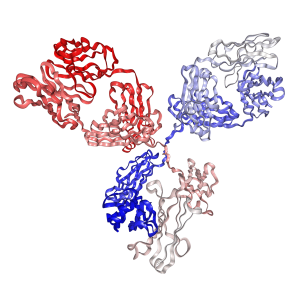
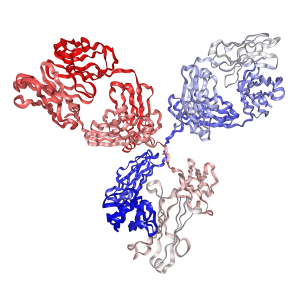
PA008009.m2cLA 是一款在哺乳动物细胞中表达的体内实验级重组抗 HEL / HEL 双特异性同型对照抗体,克隆号为 HyHEL-10 / HEL D1.3,属小鼠 IgG2c-LALAPG、κ 轻链。它的两条抗原结合臂均靶向鸡蛋清溶菌酶(hen egg-white lysozyme,HEL):一条臂来自经典的抗 HEL 小鼠单克隆抗体 HyHEL-10,另一条臂来自另一株经典抗 HEL 小鼠单克隆抗体 D1.3。因 HEL 是外源抗原、在待测的人/小鼠/大鼠样本中并不存在,该分子可作为小鼠 IgG2c-LALAPG kappa 双特异性抗体的”格式匹配阴性对照”,最大程度还原实验抗体的宿主来源、同种型、κ 轻链与 Fc 骨架,从而把特异性结合信号与非特异性背景区分开。
产品参数
| 货号 | PA008029.m2cLA |
|---|---|
| 产品名称 | 重组抗 HEL / HEL 双特异性同型对照抗体(HyHEL-10 / HEL D1.3) | Syd Labs PA008009.m2cLA |
| 英文名 | In Vivo Grade Recombinant anti-HEL / HEL Mouse IgG2c-LALAPG Kappa Bispecific Isotype Control Antibody |
| 供货商名称 | Syd Labs, Inc. |
| 品牌名 | Syd Labs |
| 别称 | 抗HEL同型对照抗体,重组HyHEL-10同型对照抗体,HyHEL-10阴性对照抗体,重组HEL D1.3同型对照抗体,HEL D1.3阴性对照抗体 |
| 克隆号 | HyHEL-10 / HEL D1.3 |
| 同种型 | 小鼠 IgG2c-LALAPG Kappa |
| 来源 | 哺乳动物细胞表达的重组抗体 |
| 反应性 | 与经测试的人、小鼠、大鼠样本呈低水平特异性结合或无特异性结合 |
| 免疫源 | 鸡蛋清溶菌酶(hen egg-white lysozyme, HEL) |
| 抗体形式 | 0.2 μM 过滤的 1× PBS 溶液 |
| 内毒素 | LAL 法测定,低于 1 EU/mg 蛋白 |
| 纯度 | 还原条件下 SDS-PAGE 检测 >95% |
| 运输 | 冰袋运输;收到后请立即按下方推荐温度保存 |
| 稳定性与存储 | 使用手动除霜冰箱并避免反复冻融;收到后 2–8°C 可保存 3 个月,-20°C 至 -70°C 可保存 12 个月 |
| 产品咨询 | Syd Labs在国内只通过代理商销售其产品,不做直销。终端用户咨询价格请联系Syd Labs中国代理商。 关于Syd Labs产品如果有任何技术或其它问题,欢迎随时联系Syd Labs国内市场推广合作伙伴:武汉多找找科技有限公司,企业微信:duozhaozhao2024 联系电话:18162581039(龙经理) |
| 应用详情 | 作为小鼠 IgG2c-LALAPG kappa 双特异性抗体的同型匹配阴性对照,用于 ELISA、免疫印迹(WB)、流式细胞术(Flow)、免疫沉淀(IP)、免疫组织化学(石蜡切片,IHC (P))、免疫组织化学(冰冻切片,IHC (F))及体内动物模型研究 |
文献
PA008009.m2cLA: Syd Labs 重组抗 HEL / HEL 双特异性同型对照抗体(HyHEL-10 / HEL D1.3) 小鼠 IgG2c-LALAPG Kappa,体内实验级(In Vivo Grade Recombinant anti-HEL / HEL Mouse IgG2c-LALAPG Kappa Bispecific Isotype Control Antibody)
重组抗 HEL / HEL 双特异性同型对照抗体(HyHEL-10 / HEL D1.3)背景知识:
HEL(鸡蛋清溶菌酶):由 129 个氨基酸组成的单链球蛋白,分子量约 14.3 kDa,是研究抗原-抗体识别的经典模型抗原;它在人、小鼠、大鼠体内均不表达,故以其为靶点的抗体不会与受试样本特异性结合,天然适合作为同型对照。
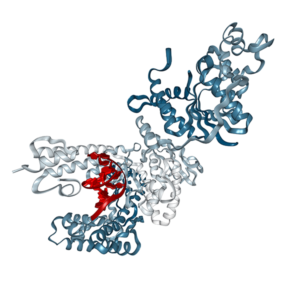
HyHEL-10 臂:源自经典抗 HEL 小鼠单克隆抗体,识别 HEL 表面由四个线性区段拼成的构象表位;1989 年 Padlan 等解析了其 Fab-HEL 复合物的 3.0 Å 晶体结构,结合以氢键与范德华力为主,并含一处弱离子对作用。
D1.3 臂:取自另一株经典抗 HEL 小鼠单克隆抗体 D1.3,识别 HEL 上由第 18–27 与第 116–129 两段构成的构象表位;1986 年由 Amit 等以 2.8 Å 分辨率解析了 D1.3 Fab-HEL 复合物结构,是首个抗原-抗体复合物晶体结构之一。
小鼠 IgG2c 骨架:IgG2c 是 C57BL/6 等 Igh-1b 单倍型小鼠表达的 IgG2a 等同物(BALB/c 等 Igh-1a 品系则表达 IgG2a);做小鼠 IgG2c 双抗的体内实验时,对照必须同为 IgG2c 骨架,才能匹配 Fc 效应功能与体内半衰期。
重组抗 HEL / HEL 双特异性同型对照抗体(HyHEL-10 / HEL D1.3)部分参考文献:
1. Three-Dimensional Structure of an Antigen-Antibody Complex at 2.8 Å Resolution A. G. Amit,et al.Science. 1986;233(4765):747-753.PMID: 2426778 “The 2.8 Å resolution three-dimensional structure of a complex between an antigen (lysozyme) and the Fab fragment from a monoclonal antibody against lysozyme has been determined and refined by x-ray crystallographic techniques. No conformational changes can be observed in the tertiary structure of lysozyme compared with that determined in native crystalline forms. The quaternary structure of Fab is that of an extended conformation. The antibody combining site is a rather flat surface with protuberances and depressions formed by its amino acid side chains. The antigen-antibody interface is tightly packed, with 16 lysozyme and 17 antibody residues making close contacts. The antigen contacting residues belong to two stretches of the lysozyme polypeptide chain: residues 18 to 27 and 116 to 129. All the complementarity-determining regions and two residues outside hypervariable positions of the antibody make contact with the antigen. Most of these contacts (10 residues out of 17) are made by the heavy chain, and in particular by its third complementarity-determining region. Antigen variability and antibody specificity and affinity are discussed on the basis of the determined structure.”
2. Structure of an antibody-antigen complex: crystal structure of the HyHEL-10 Fab-lysozyme complex E. A. Padlan,et al.Proc Natl Acad Sci U S A. 1989;86(15):5938-5942.PMCID: PMC297746 “The crystal structure of the complex of the anti-lysozyme HyHEL-10 Fab and hen egg white lysozyme has been determined to a nominal resolution of 3.0 A. The antigenic determinant (epitope) on the lysozyme is discontinuous, consisting of residues from four different regions of the linear sequence. It consists of the exposed residues of an alpha-helix together with surrounding amino acids. The epitope crosses the active-site cleft and includes a tryptophan located within this cleft. The combining site of the antibody is mostly flat with a protuberance made up of two tyrosines that penetrate the cleft. All six complementarity-determining regions of the Fab contribute at least one residue to the binding; one residue from the framework is also in contact with the lysozyme. The contacting residues on the antibody contain a disproportionate number of aromatic side chains. The antibody-antigen contact mainly involves hydrogen bonds and van der Waals interactions; there is one ion-pair interaction but it is weak.”
3. Reshaping Human Antibodies: Grafting an Antilysozyme Activity M. Verhoeyen,et al.Science. 1988;239(4847):1534-1536.PMID: 2451287 “The production of therapeutic human monoclonal antibodies by hybridoma technology has proved difficult, and this has prompted the “humanizing” of mouse monoclonal antibodies by recombinant DNA techniques. It was shown previously that the binding site for a small hapten could be grafted from the heavy-chain variable domain of a mouse antibody to that of a human myeloma protein by transplanting the hypervariable loops. It is now shown that a large binding site for a protein antigen (lysozyme) can also be transplanted from mouse to human heavy chain. The success of such constructions may be facilitated by an induced-fit mechanism.”
4. Design and production of novel tetravalent bispecific antibodies M. Josefina Coloma,et al.Nat Biotechnol. 1997;15(2):159-163.PMID: 9035141 “We have produced novel bispecific antibodies by fusing the DNA encoding a single chain antibody (ScFv) after the C terminus (CH3-ScFv) or after the hinge (Hinge-ScFv) with an antibody of a different specificity. The fusion protein is expressed by gene transfection in the context of a murine variable region. Transfectomas secrete a homogeneous population of the recombinant antibody with two different specificities, one at the N terminus (anti-dextran) and one at the C terminus (anti-dansyl). The CH3-ScFv antibody, which maintains the constant region of human IgG3, has some of the associated effector functions such as long half-life and Fc receptor binding. The Hinge-ScFv antibody which lacks the CH2 and CH3 domains has no known effector functions.”
5. Effector-attenuating Substitutions That Maintain Antibody Stability and Reduce Toxicity in Mice Megan Lo,et al.J Biol Chem. 2017;292(9):3900-3908.PMCID: PMC5339770 “The antibody Fc region regulates antibody cytotoxic activities and serum half-life. In a therapeutic context, however, the cytotoxic effector function of an antibody is often not desirable and can create safety liabilities by activating native host immune defenses against cells expressing the receptor antigens. Several amino acid changes in the Fc region have been reported to silence or reduce the effector function of antibodies. These earlier studies focused primarily on the interaction of human antibodies with human Fc-γ receptors, and it remains largely unknown how such changes to Fc might translate to the context of a murine antibody. We demonstrate that the commonly used N297G (NG) and D265A, N297G (DANG) variants that are efficacious in attenuating effector function in primates retain potent complement activation capacity in mice, leading to safety liabilities in murine studies. In contrast, we found an L234A, L235A, P329G (LALA-PG) variant that eliminates complement binding and fixation as well as Fc-γ-dependent, antibody-dependent, cell-mediated cytotoxicity in both murine IgG2a and human IgG1. These LALA-PG substitutions allow a more accurate translation of results generated with an “effectorless” antibody between mice and primates. Further, we show that both human and murine antibodies containing the LALA-PG variant have typical pharmacokinetics in rodents and retain thermostability, enabling efficient knobs-into-holes bispecific antibody production and a robust path to generating highly effector-attenuated bispecific antibodies for preclinical studies.”