
重组抗小鼠PD-1单抗(29F.1A12.1) | Syd Labs PA007163.m2cLA
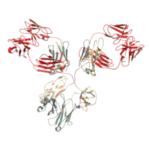
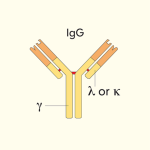
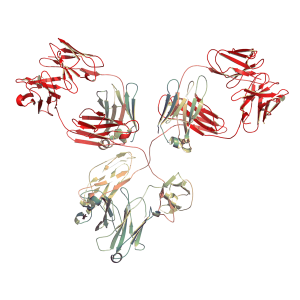
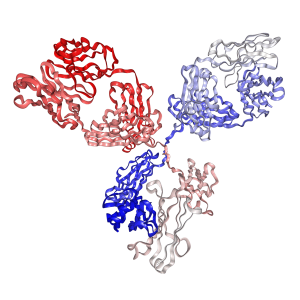
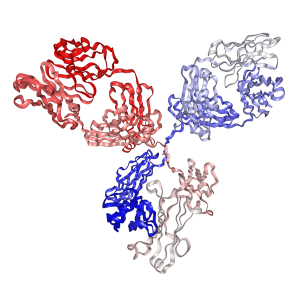
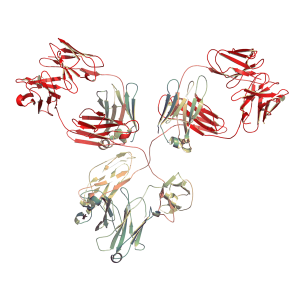
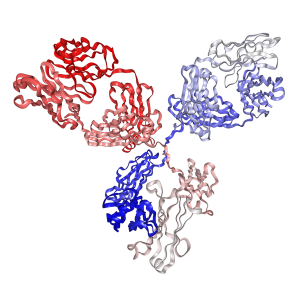
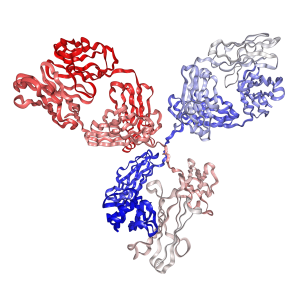
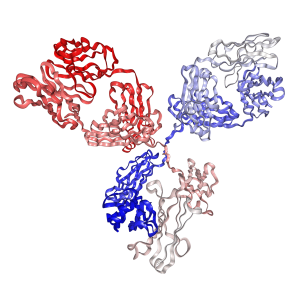
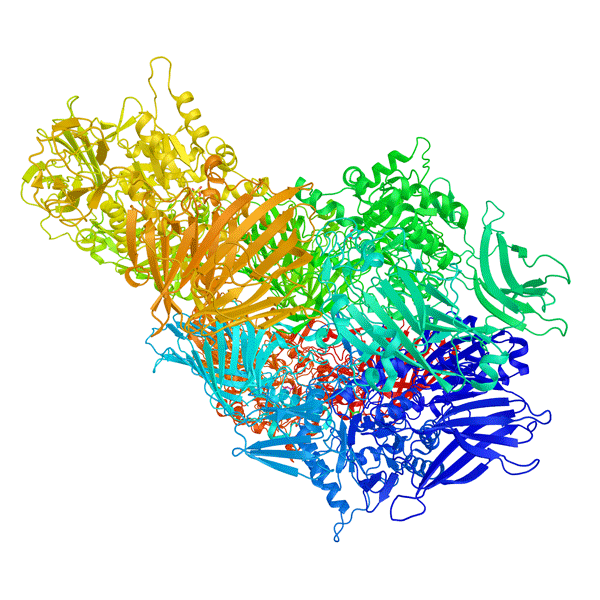
体内实验级重组抗小鼠PD-1单抗(克隆号:29F.1A12.1,货号:PA007163.m2cLA),小鼠IgG2c-LALAPG 是用哺乳动物细胞生产的重组抗体,可用于WB,免疫组织化学(IHC),流式细胞术(FC),以及各种体外和体内功能分析,与ADCC、CDC有关,做小鼠肿瘤模型适用于黑鼠。Syd Labs PA007163.m2cLA抗小鼠PD-1抗体不变区为小鼠IgG2c-LALAPG Kappa,可与重组小鼠IgG2c-LALAPG同型对照抗体配套使用。样品制备条件和最佳样品稀释度应由研究人员通过实验确定。
产品参数
| 货号 | PA007163.m2cLA |
|---|---|
| 产品名称 | 重组抗小鼠PD-1单抗(29F.1A12.1) | Syd Labs PA007163.m2cLA |
| 英文名 | In Vivo Grade Recombinant Anti-mouse PD-1 Monoclonal Antibody (Clone 29F.1A12.1), Mouse IgG2c-L234A L235A P329G (LALAPG) Kappa |
| 供货商名称 | Syd Labs, Inc. |
| 品牌名 | Syd Labs |
| 别称 | PA007163.m2cLA Syd Labs,程序性细胞死亡蛋白1,PD-1,CD279,29F.1A12 |
| 概述 | 体内实验级重组抗小鼠PD-1小鼠IgG2c-L234A L235A P329G (LALAPG) Kappa单克隆抗体(克隆号29F.1A12.1)用哺乳动物细胞生产 |
| 克隆号 | 29F.1A12.1,与大鼠抗小鼠PD-1单克隆抗体(克隆号:29F.1A12)相同的可变区序列。 |
| 同种型 | 小鼠 IgG2c, kappa |
| 免疫源 | 用小鼠PD-1 cDNA免疫大鼠,再用小鼠PD-1- Ig融合蛋白免疫大鼠,产生原大鼠杂交瘤(克隆号:29F.1A12)。 |
| 抗体形式 | 0.2 μM过滤溶液,1x PBS |
| 内毒素 | 根据 LAL 方法,≤1 EU每1mg 蛋白质。提供特级体内实验级重组抗小鼠PD-1单克隆抗体(克隆号29F.1A12.1),小鼠IgG2c-L234A L235A P329G (LALAPG) Kappa(内毒素≤0.05 EU/mg)。 |
| 纯度 | >95%(在还原条件下通过SDS-PAGE测定) |
| 运输 | 体内实验级重组抗小鼠PD-1小鼠IgG2c-LALAPG单克隆抗体(克隆号29F.1A12.1)用冰袋运输。收到后,请立即将其存放在下面建议的温度下。 |
| 稳定性与存储 | 使用手动除霜冰箱并避免重复冻融循环。 如果保存在2 至 8°C,自收到之日起可保存3个月。如果保存在-20 至 -70°C,自收到之日起可保存 12个月。 |
| 注意事项 | PA007163.m2cLA: Syd Labs 重组抗小鼠PD1单克隆抗体与大鼠抗小鼠PD-1 / CD279单克隆抗体(克隆号:29F.1A12)具有相同的可变区序列,用哺乳动物细胞生产,适合体外和体内研究。 |
| 产品咨询 | Syd Labs在国内只通过代理商销售其产品,不做直销。终端用户咨询价格请联系Syd Labs中国代理商。 关于Syd Labs产品如果有任何技术或其它问题,欢迎随时联系Syd Labs国内市场推广合作伙伴:武汉多找找科技有限公司,企业微信:duozhaozhao2024 联系电话:18162581039(龙经理) |
| 应用详情 | western blot (WB)、免疫组织化学(IHC)、流式细胞术(FC)以及各种体外和体内功能检测。 |
文献
PA007163.m2cLA: Syd Labs体内实验级重组抗小鼠PD-1单克隆抗体(克隆号29F.1A12.1),小鼠IgG2c-L234A L235A P329G (LALAPG) Kappa(In Vivo Grade Recombinant Anti-mouse PD-1 Monoclonal Antibody (Clone 29F.1A12.1),Mouse IgG2c-L234A L235A P329G (LALAPG) Kappa)
大鼠抗小鼠 PD-1 单克隆抗体(克隆号 29F.1A12.1,大鼠 IgG2a Kappa)可与由小鼠 Pdcd1 基因编码的小鼠 PD-1 蛋白(CD279 或程序化死亡受体-1)发生特异性反应。PD-1 是免疫球蛋白超家族 CD28 家族中一个重要的免疫检查点受体。PD-1 通过其两个 B7 家族配体(PD-L1 和 PD-L2)的下游信号传导发挥作用。大量的临床前研究表明,在黑色素瘤及其他恶性肿瘤的同系小鼠模型中,通过靶向抗小鼠 PD-1 抗体治疗,能够重新激活 T 细胞介导的细胞毒性并一过性抑制肿瘤生长。29F.1A12.1 阻断型抗体可有效抑制 PD-L1/PD-L2 蛋白与其受体 PD-1 蛋白之间的相互作用,从而恢复抗肿瘤免疫应答。
我们的重组 29F.1A12.1 抗体经过精密工程设计,完美保留了源自原始大鼠杂交瘤(克隆号:29F.1A12)可变区的 100% 精准氨基酸序列。该杂交瘤最初是通过给大鼠免疫小鼠 PD-1 cDNA、随后接种小鼠 PD-1-Ig 融合蛋白而独特制备的。该体内实验级重组抗小鼠 PD-1 抗体在高效哺乳动物细胞中表达,消除了杂交瘤基因漂移的风险,具有小于 20 nM 的高结合亲和力以及大于 95% 的纯度。该抗体提供多种通用的重组形式,包括经典的大鼠 IgG2a 以及 Fc 静默型小鼠 IgG2c-LALAPG(L234A/L235A/P329G)平台。其高纯度、低内毒素(小于 1.0 EU/mg)且无叠氮化钠的配方,已全面通过蛋白质印迹(WB)、免疫组织化学(IHC)、流式细胞术(FC)以及严格的长期体内(in vivo)功能实验的交叉验证。
抗小鼠 PD-1 单克隆抗体(克隆号:29F.1A12)参考文献
Kopchick JJ, et al. Exp Biol Med (Maywood). 2026 Mar 30;251:10850. doi: 10.3389/ebm.2026.10850. PMID: 41982211; PMCID: PMC13071501.
“The experimental design of the four in vivo experiments reported in this study is shown in Figure 1. The goals of Experiments 1 (Figure 1A) and 2 (Figure 1B) were to assess how increased lymphatic flow affects tumor metastasis at both young adult and advanced ages. Therefore, we performed LPT before and after the injection of cancer cells. Specifically, the sham and LPT treatments were administered daily on days 1–7; the cancer cells were injected on day 8; and the animals were treated every other day on days 7–27. On day 28, mice were euthanized with carbon dioxide inhalation. In Experiment 3 (Figure 1C), we aimed to increase the clinical translatability of the study by initiating LPT after cancer cell injection and combining it with a commonly used treatment for metastatic melanoma, an immune checkpoint inhibitor. In addition to the sham and LPT treatments, the mice were treated with anti-mouse programmed cell death protein 1 (PD1) antibody (#PA007163.m2cLA, Syd Labs) or an isotype control antibody (#PA007141, Syd Labs). Four treatments of 200 μg of antibody diluted in 100 μL of PBS (2 mg/mL) were administered intraperitoneally between days 9 and 21 of the experiment. The anti-PD1 dosing regimen of 200 ug per injection was selected based on established murine immunotherapy protocols rather than allometric scaling from human doses, consistent with prior studies demonstrating biological efficacy at this dose [21, 22]. Mice were divided into four treatment groups: group 1 received sham treatment and isotype control antibodies; group 2 received LPT and isotype control antibodies; group 3 received sham treatment and anti-PD1 antibodies; and group 4 received LPT treatment and anti-PD1 antibodies. The cancer cells were injected on experimental day 0, treatments started on day 8, ended on day 22, and the mice were euthanized with carbon dioxide inhalation and on day 25.”
Martins C, et al. J Immunother Cancer. 2022 Jul;10(7):e004655. PMID: 35858688
“Flow cytometric analyses with two separate anti-PD-1 ab clones, 29F.1A12 and RMP1-30, revealed PD-1 surface protein expression on live murine melanoma cells. Recombinant PD-L1 also recognized melanoma cell-expressed PD-1, the blockade of which by 29F.1A12 fully abrogated PD-1:PD-L1 binding. Together, our data provides multiple lines of evidence establishing PD-1 expression by live murine melanoma cells and validates ab clones and assay systems for tumor cell-directed PD-1 pathway investigations.”
F. P., et al. J Immunother Cancer. 2020 Oct;8(2):e001306. PMID: 33055177
“In preclinical studies, the PD1-Vaxx outperformed the standard anti-mouse PD-1 antibody (mAb 29F.1A12) in a mouse model of human HER-2 expressing colon carcinoma. We obtained enhanced inhibition of tumor growth in a syngeneic BALB/c model challenged with colon carcinoma cell line CT26/HER-2 which outperformed the standard anti-mouse PD-1 mAb (29F.1A12). The vaccine construct effectively triggers an immune response that mimics the efficacy of monoclonal antibody checkpoint inhibition.”
Monitoring PD-1 Phosphorylation to Evaluate PD-1 Signaling during Antitumor Immune Responses.
T. A., et al. Cancers (Basel). 2021 Nov 25;13(23):5926. PMID: 34885002
“Lysates were made from the indicated cell lines and Western blotted with antibodies against phospho–PD-1 (6G12), mPD-1 (29F.1A12), and GAPDH. One mAb clone (407.6G12) detected a band only in pervanadate-treated, PD-1+ samples, and this band corresponded in size to PD-1. These results show that mAb 407.6G12 can detect the phosphorylated form of the PD-1 ITSM by both Western blot and flow cytometry.”
Human PD-1 agonist treatment alleviates neutrophilic asthma by reprogramming T cells.
G. L., et al. JCI Insight. 2023 Feb 8;8(3):e155986. PMID: 36752077
“PD-1 deficiency was associated with an increased neutrophilic airway hyperreactivity and high recruitment of inflammatory cells to the lungs. Consistently, PD-1 agonist treatment dampened airway hyperreactivity, decreased neutrophil recruitment, and modulated cytokine production in a humanized PD-1 mouse model. Mechanistically, we demonstrated that the inhibitory effect of PD-1 agonist is associated with the reprogramming of pulmonary effector T cells.”
P. A., et al. Vaccines (Basel). 2022 May 6;10(5):737. PMID: 35632490
“Cancer vaccines have the ability to stimulate the native immune system and an engineered B-cell epitope can elicit high-affinity polyclonal antibodies with similar efficacy to PD-1 monoclonal antibodies in murine animal models. We designed and synthesized a unique B-cell vaccine, PD1-Vaxx, and tested the immunogenicity and antitumor properties in CT26 colon cancer BALB/c syngeneic mice model. The results suggest the vaccine has acceptable pharmacology and immunogenicity profiles to justify initiating clinical trials.”
关于重组抗小鼠 PD-1 抗体(克隆号:29F.1A12.1)的常见问题解答 (FAQ)
问:是什么让重组 29F.1A12.1 克隆区别于其他抗小鼠 PD-1 抗体?
答:虽然有多个克隆能够在体内阻断鼠类 PD-1 通路,但 29F.1A12.1 克隆凭借其多年的丰富文献记录以及在功能实验和蛋白质印迹(Western Blot)中的双重兼容性而脱颖而出。(Syd Labs 解答)我们的重组抗小鼠 PD-1 抗体(克隆号 29F.1A12.1)是通过对原始杂交瘤进行基因工程改造而生成的(该杂交瘤由非传统的 cDNA 加蛋白质免疫法制备)。这确保了无与伦比的结构稳定性。与其他主要局限于体内应用的克隆不同,我们的重组 29F.1A12.1 已全面通过高灵敏度蛋白质印迹(WB)、流式细胞术(FC)和免疫组织化学(IHC)的交叉验证,为研究人员提供从蛋白质表达验证到动物免疫疗法分析的无缝衔接。
问:针对我的同系移植模型,我应该选择哪种同工型和宿主物种形式的重组 29F.1A12.1?
答:Syd Labs 提供全面的重组 29F.1A12.1 格式矩阵,以匹配特定的宿主工程化对照并消除非特异性 Fc 受体激活:
1. 大鼠 IgG2a (PA007163.r2a):天然杂交瘤的重组对应物,结合亲和力小于 20 nM,是标准检查点抑制的理想选择。
2. 小鼠 IgG2c / IgG2a LALAPG (PA007163.m2cLA / PA007163.m2aLA):采用 Fc 静默 / Fc 沉默平台设计(L234A/L235A/P329G 突变)。如果您使用的是 C57BL/6 或 NOD 小鼠,请选择 IgG2c LALAPG;对于 BALB/c 品系,请选择 IgG2a LALAPG,以防止 ADCC 介导的靶细胞耗竭并最大限度减少抗药物抗体(ADA)的干扰。
3. 小鼠 IgG1-D265A (PA007163.m1DA):用于专用效应功能静默的超纯替代选择。
4. 兔 IgG (PA007163.rt):一种极为罕见的重组兔嵌合形式,专门用于高级多重免疫荧光面板或必须严格避免与大鼠/小鼠宿主发生交叉反应的二抗染色对照。
问:重组 29F.1A12.1 的体内半衰期是多少?推荐的给药方案是什么?
答:在标准的同系移植小鼠模型中,我们的重组大鼠 IgG2a (PA007163.r2a) 和嵌合型 mIgG2c LALAPG (PA007163.m2cLA) 格式的体内半衰期约为 6 至 9 天。由于 29F.1A12.1 克隆具有小于 20 nM 的工程化结合亲和力,它能够提供稳健且可预测的靶点饱和度。对于标准肿瘤模型(如 B16-F10 黑色素瘤或 Lewis 肺癌),已建立并发表的给药方案为:每次 200 微克,用 PBS 稀释(2 mg/mL),通过腹腔(i.p.)注射给药,每 3 至 4 天一次(一周两次),持续 2 至 3 周,自肿瘤接种后第 8 至 9 天左右开始。
问:如何为 29F.1A12.1 的不同工程化宿主形式配对正确的同型对照?
答:鉴于我们的 29F.1A12.1 克隆拥有广泛的宿主框架,匹配精确的工程化阴性对照是消除背景伪影的严格要求:
• 针对天然大鼠 IgG2a 变体 (PA007163.r2a),请配对标准的重组大鼠 IgG2a 同型对照。
• 针对 Fc 沉默的小鼠 IgG2c LALAPG 格式 (PA007163.m2cLA) 或小鼠 IgG2a LALAPG 格式 (PA007163.m2aLA),必须避免使用野生型对照;应明确将其与 Fc 沉默的重组小鼠 IgG2c/IgG2a LALAPG Kappa 同型对照(如 Syd Labs PA007141 系列)配套使用。
• 针对独特的兔 IgG 格式 (PA007163.rt),请确保对照组接受匹配的重组兔 IgG 恒定区对照,以便对多重染色或体外实验进行正确的基线校准。
问:为防止重组 29F.1A12.1 发生聚集,其纯度、内毒素标准和保存条件是什么?
答:我们每一批体内实验级重组抗小鼠 PD-1 抗体(克隆号 29F.1A12.1)均经过严格的质量控制。产品以 0.2 微米过滤溶液形式提供于 1x PBS 中,完全不含叠氮化钠及防腐剂,以确保无细胞毒性。经鲎试剂(LAL)法检测,内毒素水平经认证低于 1 EU/mg(大规模批次通常低于 0.05 EU/mg),通过 SDS-PAGE 验证的蛋白质纯度大于 95%。为保持长期稳定性并防止蛋白质聚集,短期可在 2°C 至 8°C 下保存(最长 1 个月);若需长达 12 个月的长期保存,请分装为工作液并置于手动除霜冰箱中于 -20°C 至 -70°C 下冷冻保存。严格避免反复冻融,这可能诱导物理片段化或沉淀。
PA007505.r2a-Syd-Labs-300x300.png)
-PA007504.r2a-Syd-Labs-300x300.png)