

重组抗小鼠OX40单抗(OX86) | Syd Labs PA007168.m1
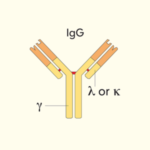
体内实验级重组抗小鼠OX40单克隆抗体(克隆号OX86),小鼠IgG1 Kappa(In Vivo Grade Recombinant Anti-mouse OX40 Mouse IgG1 Kappa Monoclonal Antibody (Clone OX86))。来自大鼠抗小鼠OX40单克隆抗体(克隆号:OX86)(rat anti-mouse OX40 monoclonal antibody (clone number: OX86))的可变区序列的重组抗小鼠OX40单克隆抗体(Recombinant anti-mouse OX40 monoclonal antibodies)是用哺乳动物细胞生产,适合体外和体内研究。

产品参数
| 货号 | PA007168.m1 |
|---|---|
| 产品名称 | 重组抗小鼠OX40单抗(OX86) | Syd Labs PA007168.m1 |
| 英文名 | In Vivo Grade Recombinant Anti-mouse OX40 Mouse IgG1 Kappa Monoclonal Antibody (Clone OX86) |
| 供货商名称 | Syd Labs, Inc. |
| 品牌名 | Syd Labs |
| 别称 | CD134 |
| 概述 | 来自大鼠抗小鼠OX40单克隆抗体(克隆号:OX86)(rat anti-mouse OX40 monoclonal antibody (clone number: OX86))的可变区序列的重组抗小鼠OX40单克隆抗体(Recombinant anti-mouse OX40 monoclonal antibodies)是用哺乳动物细胞生产,适合体外和体内研究。 |
| 克隆号 | OX86 |
| 同种型 | 小鼠 IgG1, kappa |
| 特异性 | OX40 / CD134 |
| 抗体形式 | 0.2 μM过滤溶液,1x PBS |
| 内毒素 | 根据 LAL 方法,≤1 EU每1mg 蛋白质。提供特级体内实验级重组抗小鼠OX40小鼠IgG1 Kappa单克隆抗体(克隆号OX86)(In Vivo Grade Recombinant Anti-mouse OX40 Mouse IgG1 Kappa Monoclonal Antibody (Clone OX86),内毒素≤0.05 EU/mg)。 |
| 纯度 | >95%(在还原条件下通过SDS-PAGE测定) |
| 运输 | 体内实验级重组抗小鼠OX40小鼠IgG1 Kappa单克隆抗体(克隆号OX86)(In Vivo Grade Recombinant Anti-mouse OX40 Mouse IgG1 Kappa Monoclonal Antibody (Clone OX86))用冰袋运输。收到后,请立即将其存放在下面建议的温度下。 |
| 稳定性与存储 | 使用手动除霜冰箱并避免重复冻融循环。 如果保存在2 至 8°C,自收到之日起可保存3个月。如果保存在-20 至 -70°C,自收到之日起可保存 12个月。 |
| 注意事项 | 来自大鼠抗小鼠OX40单克隆抗体(克隆号:OX86)(rat anti-mouse OX40 monoclonal antibody (clone number: OX86))的可变区序列的重组抗小鼠OX40单克隆抗体(Recombinant anti-mouse OX40 monoclonal antibodies)是用哺乳动物细胞生产,适合体外和体内研究。 |
| 产品咨询 | Syd Labs在国内只通过代理商销售其产品,不做直销。终端用户咨询价格请联系Syd Labs中国代理商。 关于Syd Labs产品如果有任何技术或其它问题,欢迎随时联系Syd Labs国内市场推广合作伙伴:武汉多找找科技有限公司,企业微信:duozhaozhao2024 联系电话:18162581039(龙经理) |
| 应用详情 | ELISA,免疫印迹(WB),免疫荧光(IF),流式细胞术(FC),以及各种体外和体内功能测定。 |
文献
PA007168.m1: 体内实验级重组抗小鼠OX40单克隆抗体(克隆号OX86),小鼠IgG1 Kappa(In Vivo Grade Recombinant Anti-mouse OX40 Mouse IgG1 Kappa Monoclonal Antibody (Clone OX86))
大鼠抗小鼠 OX40 / CD134 单克隆抗体 OX86(大鼠 IgG1 Kappa)可与小鼠 OX40 蛋白(CD134)发生特异性反应,OX40 是一种属于肿瘤坏死因子受体(TNFR)超家族的共刺激分子。基于 OX40 激动剂的联合疗法正在成为具有前景的新型癌症免疫治疗方案。OX86 抗体推荐用于通过免疫荧光(IF)和流式细胞术(FCM)检测小鼠 OX40 细胞表面抗原,并可提供荧光素 FITC 或 PE 标记物,用于石蜡切片免疫组化(IHC-P)和流式细胞术(FCM)分析。
我们的重组 OX86 抗体包含了大鼠抗小鼠 OX40 单克隆抗体(杂交瘤克隆号:OX86)的部分(可变区)或完整的氨基酸序列。
抗小鼠OX40单抗(OX86)参考文献:
1. Generation and characterization of OX40-ligand fusion protein that agonizes OX40 on T-Lymphocytes
Biotech Research Group, et al. Sci Rep. 2024. PMID: 39399876
“OX40 (CD134) is a crucial co-stimulatory receptor expressed primarily on activated T lymphocytes that enhances survival and clonal expansion. To leverage this pathway, we engineered and characterized a novel recombinant OX40-ligand fusion protein designed to act as a potent agonist. Our characterization confirms that this multimeric construct successfully binds and clusters surface OX40, delivering robust activation signals that enhance T-cell proliferation and cytokine secretion in vitro and in vivo.”
2. OX40+ plasmacytoid dendritic cells in the tumor microenvironment promote antitumor immunity
Poropatich A, et al. Nat Commun. 2020. PMID: 32601234
“Plasmacytoid dendritic cells (pDCs) are traditionally recognized for their rapid production of type I interferons during viral infections. This study identifies a distinct population of OX40+ pDCs residing within the tumor microenvironment that directly contributes to antitumor immune responses. Targeting and activating OX40 on these dendritic cells using monoclonal antibodies significantly enhances antigen presentation and downstream T-cell-mediated tumor clearance.”
Mahmoud AD, et al. Cell Rep. 2019. PMID: 30699345
“Thymic regulatory T cell (tTreg) development is a highly regulated, multi-step selection process dependent on TCR and co-stimulatory signaling. Here, we demonstrate that OX40 signaling plays a critical, non-redundant role specifically in the TCR-independent phase of both human and murine tTreg generation. Modulating the OX40/OX40L pathway using specific antibody clones highlights novel biological avenues to control regulatory T-cell populations in autoimmune contexts.”
4. Activation of OX40 Prolongs and Exacerbates Autoimmune Experimental Uveitis
Prendergast S, et al.Invest Ophthalmol Vis Sci. 2011. PMID: 21917932
“Experimental autoimmune uveitis (EAU) is a well-established rodent model used to investigate the immunopathogenesis of human autoimmune uveoretinitis. In this study, we demonstrate that in vivo administration of the agonistic anti-mouse OX40 monoclonal antibody (clone OX86) significantly prolonged and exacerbated uveitis clinical scores. These results highlight the critical role of the OX40/OX40L pathway in driving and maintaining pathogenic effector T-cell responses in immunoprivileged tissues.”
5. Imaging activated T cells predicts response to cancer vaccines
Aarntzen EH, et al.Clin Cancer Res. 2018. PMID: 29555678
“Noninvasive imaging technologies are highly valuable tools to monitor the spatial-temporal dynamics of active T-cell infiltration in oncology trials. Here, we utilize radiolabeled antibodies targeting specific activation markers, including anti-OX40 (clone OX86), to monitor immunological responses to cancer vaccine regimens. High-resolution imaging of activated T cells successfully predicted long-term therapeutic efficacy and overall survival in tumor-bearing mouse models.”