
重组抗小鼠 IFN单抗(R4-6A2) | Syd Labs PA007546.r1

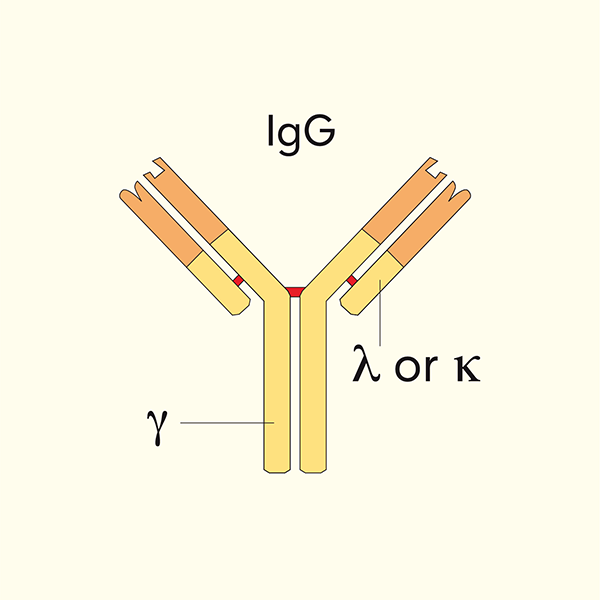
Syd Labs体内实验级重组抗小鼠 IFN-γ(Interferon-gamma,又称 Immune interferon(免疫干扰素)、Type II interferon(II型干扰素)、T cell interferon(T细胞干扰素)、Macrophage-activating factor(MAF,巨噬细胞活化因子)、IFN-g)单克隆抗体,克隆号 R4-6A2,恒定区为大鼠 IgG1 Kappa(Rat IgG1 Kappa),由哺乳动物细胞重组表达。IFN-γ 是主要由活化的 Th1 CD4⁺ T 细胞、CD8⁺ 细胞毒性 T 细胞、NK 细胞、NKT 细胞及 γδ T 细胞分泌的同源二聚体 15–20 kDa 促炎细胞因子,是 Th1 型免疫应答的标志性分子,通过与 IFN-γ R1/IFN-γ R2(CD119/AF-1)受体复合物结合,激活 JAK1/JAK2-STAT1-IRF1 信号通路,驱动 M1 型巨噬细胞活化、MHC I/II 分子与抗原呈递相关分子(B7、iNOS、ROS)上调、抗病毒/抗胞内病原体免疫、IgG2a/2b/3 类别转换以及 Th1/Th17 极化;同时可与 TNF-α 协同抑制正常细胞与转化细胞增殖、调节 Treg 与 Tr1 功能,并在自身免疫、感染免疫与肿瘤免疫中发挥双重作用。R4-6A2 是经典的大鼠抗小鼠 IFN-γ 中和抗体克隆,可特异性结合小鼠 IFN-γ 并阻断其生物学活性,广泛用于体内 Th1 型炎症/自身免疫病(EAE、CIA、NOD)、感染模型、肿瘤免疫及体外 T 细胞分化/细胞因子功能实验。本品经 Protein G 亲和纯化,还原性 SDS-PAGE 及 HPLC 检测纯度>95%,LAL 法内毒素<1 EU/mg,0.2 μM 过滤于 pH 7.4、不含稳定剂或防腐剂的 1× PBS 溶液,适用于 ELISA、中和实验、PK/ADA 等生物分析功能实验,以及受小鼠 IFN-γ 蛋白影响的生物学通路研究。
产品参数
| 货号 | PA007546.r1 |
|---|---|
| 产品名称 | 重组抗小鼠 IFN单抗(R4-6A2) | Syd Labs PA007546.r1 |
| 英文名 | In Vivo Grade Recombinant Anti-mouse IFN gamma Monoclonal Antibody (Clone: R4-6A2), Rat IgG1 Kappa |
| 供货商名称 | Syd Labs, Inc. |
| 品牌名 | Syd Labs |
| 别称 | Interferon-gamma(IFN-γ,干扰素-γ)、Immune interferon(免疫干扰素)、Type II interferon(II型干扰素)、T cell interferon(T细胞干扰素)、Macrophage-activating factor(MAF,巨噬细胞活化因子)、IFN-g |
| 克隆号 | R4-6A2 |
| 同种型 | 大鼠 IgG1 Kappa |
| 特异性 | 该体内实验级重组大鼠单克隆抗体(克隆号 R4-6A2)特异性结合小鼠 IFN-γ |
| 抗体形式 | 0.2 μM 过滤的溶液,pH 7.4,不含稳定剂或防腐剂 |
| 内毒素 | LAL 法测定,低于每 1 mg 蛋白 1 EU |
| 纯度 | 还原性条件下 SDS-PAGE 及 HPLC 检测>95% |
| 运输 | 采用冰袋运输;收到后请立即按下方推荐温度保存 |
| 稳定性与存储 | 使用手动除霜冰箱,避免反复冻融;自收货之日起 12 个月,按供货状态于 −20 ℃ 至 −70 ℃ 保存;自收货之日起 1 个月,按供货状态于 2 ℃ 至 8 ℃ 保存 |
| 产品咨询 | Syd Labs在国内只通过代理商销售其产品,不做直销。终端用户咨询价格请联系Syd Labs中国代理商。 关于Syd Labs产品如果有任何技术或其它问题,欢迎随时联系Syd Labs国内市场推广合作伙伴:武汉多找找科技有限公司,企业微信:duozhaozhao2024 联系电话:18162581039(龙经理) |
| 应用详情 | ELISA、中和实验、功能实验(如生物分析 PK 与 ADA 检测),以及研究受小鼠 IFN-γ 蛋白影响的生物学通路的实验 |
文献
PA007546.r1: Syd Labs 重组抗小鼠 IFN单克隆抗体(克隆号R4-6A2) ,体内实验级重组,大鼠 IgG1 Kappa(In Vivo Grade Recombinant Anti-mouse IFN gamma Monoclonal Antibody (Clone: R4-6A2), Rat IgG1 Kappa)
重组抗小鼠 IFN单抗(R4-6A2)背景知识:
IFN-γ(Interferon-gamma,干扰素-γ,基因符号 Ifng,位于小鼠 10 号染色体、人类 12 号染色体)是 II 型干扰素家族中唯一成员,文献中常见别名如下:
Immune interferon(免疫干扰素):因最初发现于免疫激活的淋巴细胞中,区别于病毒诱导的 I 型干扰素(IFN-α/β)而得名;
Type II interferon(II 型干扰素):与 I 型(IFN-α/β/ω/τ)、III 型(IFN-λ)干扰素并列的分类命名;
T cell interferon(T细胞干扰素):强调其主要由活化 T 细胞产生;
Macrophage-activating factor(MAF,巨噬细胞活化因子):因其经典功能是激活巨噬细胞杀伤胞内病原体;
IFN-g:IFN-gamma 的常用缩写写法。
IFN-γ 以同源二聚体形式存在(每个单体约 15–20 kDa,糖基化不影响其生物学活性),主要由 Th1 CD4⁺ T 细胞、细胞毒性 CD8⁺ T 细胞、NK 细胞、NKT 细胞、γδ T 细胞及浆细胞样树突状细胞在抗原刺激或 IL-12/IL-18 作用下分泌。
重组抗小鼠 IFN单抗(R4-6A2)部分参考文献:
1. Oncolytic adenovirus expressing IL-23 and p35 elicits IFN-gamma- and TNF-alpha-co-producing T cell-mediated antitumor immunity.
Choi IK, Lee JS, Zhang SN, Park J, Sonn CH, Lee KM, Kim CH, Oh E, Yun CO
PLoS One. 2013;8(7):e67512. PMCID: PMC3692552 PMID: 23844018 DOI: 10.1371/journal.pone.0067512
“Cytokine immunogene therapy is a promising strategy for cancer treatment. Interleukin (IL)-12 boosts potent antitumor immunity by inducing T helper 1 cell differentiation and stimulating cytotoxic T lymphocyte and natural killer cell cytotoxicity. IL-23 has been proposed to have similar but not overlapping functions with IL-12 in inducing Th1 cell differentiation and antitumor immunity. However, the therapeutic effects of intratumoral co-expression of IL-12 and IL-23 in a cancer model have yet to be investigated. Therefore, we investigated for the first time an effective cancer immunogene therapy of syngeneic tumors via intratumoral inoculation of oncolytic adenovirus co-expressing IL-23 and p35, RdB/IL23/p35. Intratumoral administration of RdB/IL23/p35 elicited strong antitumor effects and increased survival in a murine B16-F10 syngeneic tumor model. The levels of IL-12, IL-23, interferon-gamma (IFN-gamma), and tumor necrosis factor-alpha (TNF-alpha) were elevated in RdB/IL23/p35-treated tumors. Moreover, the proportion of regulatory T cells was markedly decreased in mice treated with RdB/IL23/p35. Consistent with these data, mice treated with RdB/IL23/p35 elicited high levels of tumor-specific and nonspecific immune responses. Importantly, therapeutic mechanism of antitumor immunity mediated by RdB/IL23/p35 is associated with the generation and recruitment of IFN-gamma- and TNF-alpha-co-producing T cells in tumor microenvironment. These results provide a new time-effective cancer immunogene therapy strategy in clinical setting.”
2.In vivo induction of Tr1 cells via mucosal dendritic cells and AHR signaling.
Wu HY, Quintana FJ, Weiner HL
PLoS One. 2011;6(8):e23618. PMCID: PMC3157396 PMID: 21886804 DOI: 10.1371/journal.pone.0023618
“Upon T-cell receptor (TCR) mediated activation, Tr1 cells produce high levels of IL-10 and transforming growth factor-beta (TGF-beta), low levels of interferon-gamma (IFN-gamma) and almost no IL-2 or IL-4. Previously, we demonstrated that nasal anti-CD3 induces IL-10(+) latency-associated peptide (LAP)(+) T regulatory cells (Tr1) that are both TGF-beta and IL-10 dependent and suppress IL-23R expression and Th17 cells. Here we show that IL-27 is required for the induction of nasal anti-CD3 induced Tr1 cells. Upon activation with anti-CD3 in vitro, FACS sorted CD4+CD25-GFP(IL-10)+ T cells secreted IL-10 and IFN-gamma. Mucosal CD11c+ dendritic cells produce IL-27 and TGF-β after nasal anti-CD3. Anti-IL-27Ra and anti-TGF-β blocked the in vitro induction of LAP+ Tr1 by nasal anti-CD3. Concomitant with the deficient generation of LAP+ Tr1 cells, we found that CD4+ T cells from IL-27R-/-/lpr mice given nasal anti-CD3 produced significantly higher amounts of IFN-gamma and IL-12 upon in vitro stimulation with anti-CD3. Tr1 generation was dependent on activation of the aryl hydrocarbon receptor (AHR) signaling pathway. Thus, mucosal DCs secrete IL-27 and TGF-beta that acts on T cells together with AHR signaling to induce Tr1 cells in vivo.”
3.Monoclonal antibody to murine gamma interferon inhibits lymphokine-induced antiviral and macrophage tumoricidal activities.
Spitalny GL, Havell EA
J Exp Med. 1984;159(2):669–676. PMID: 6425332 DOI: 10.1084/jem.159.2.669
“Fusion of rat immune lymph node cells to mouse myeloma cells produced hybridomas that secrete monoclonal antibody to murine gamma interferon (IFN-γ). The antibody specifically neutralized the antiviral activity of murine gamma interferon but did not neutralize murine alpha or beta interferon. Furthermore, this antibody completely blocked the induction of macrophage tumoricidal activity by supernatants of mitogen-stimulated mouse spleen cells and by partially purified murine gamma interferon. The data indicate that the activation of macrophages for tumor cell killing and the development of antiviral resistance are mediated by gamma interferon and that the monoclonal antibody described provides a tool for studying the role of gamma interferon in immunological processes. The R4-6A2 antibody has become a standard reagent for neutralizing murine IFN-γ in vitro and in vivo.”