重组抗HIV gp120外域单克隆抗体(2G12) 人IgG1 Kappa | Syd Labs PA007185
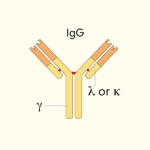
Syd Labs生产的体内实验级重组抗HIV gp120外域单克隆抗体(克隆2G12)为哺乳动物细胞表达的全长人IgG1 Kappa抗体,是由Katinger团队于1990年代从HIV-1感染者中分离的第一代广谱中和抗体,也是历史上首株被完整结构解析、明确以高甘露糖簇为唯一识别靶点的HIV bNAb;其最独特特征为两条重链可变区(VH)发生结构域交换(domain exchange),两个VH交叉排列形成扩展结合面,以多价方式识别gp120外域”沉默面”上由N295、N332、N339、N392保守N-糖基共同构成的密集Manα1-2Man高甘露糖簇,对约30–40%跨亚型HIV-1分离株具中和活性;2G12是HIV糖基屏障识别机制研究的原型分子、SOSIP/Env三聚体糖基谱分析与高甘露糖特异性抗体评价的经典对照试剂,也最早完成SHIV恒河猴阴道传播被动保护实验验证,适用于HIV-1中和实验、gp120高甘露糖糖基识别机制研究、Env结构生物学糖基分析、糖基化依赖性疫苗免疫原评价及多种体内外功能实验。
产品参数
| 货号 | PA007185 |
|---|---|
| 产品名称 | 重组抗HIV gp120外域单克隆抗体(2G12) 人IgG1 Kappa | Syd Labs PA007185 |
| 英文名 | In Vivo Grade Recombinant Anti-HIV GP120 Outer Domain Monoclonal Antibody (Clone 2G12), Human IgG1 Kappa |
| 供货商名称 | Syd Labs, Inc. |
| 品牌名 | Syd Labs |
| 克隆号 | 2G12 |
| 同种型 | 人 IgG1,Kappa |
| 反应性 | HIV-1(跨亚型,约 30–40% 假病毒被中和;严格依赖gp120高甘露糖糖基,不识别复杂型糖基,不结合去糖基化gp120) |
| 特异性 | HIV gp120外域高甘露糖簇(glycan cluster,N295/N332/N339/N392糖基构成的Manα1-2Man密集糖基区,位于gp120"沉默面"silent face) |
| 抗体形式 | 0.2 μm 过滤的 1× PBS 溶液 |
| 内毒素 | <1 EU/mg(LAL 法测定) |
| 纯度 | >95%(还原性 SDS-PAGE) |
| 运输 | 冰袋运输,收到后请立即按推荐条件储存 |
| 稳定性与存储 | 收到后 2–8 ℃ 保存 1 个月;−20 ℃ 至 −70 ℃ 保存 12 个月;避免反复冻融,建议使用可手动除霜的冰箱 |
| 产品咨询 | Syd Labs在国内只通过代理商销售其产品,不做直销。终端用户咨询价格请联系Syd Labs中国代理商。 关于Syd Labs产品如果有任何技术或其它问题,欢迎随时联系Syd Labs国内市场推广合作伙伴:武汉多找找科技有限公司,企业微信:duozhaozhao2024 联系电话:18162581039(龙经理) |
| 应用详情 | ELISA、Western blot、免疫组化(IHC)、流式细胞术(FC)、HIV-1中和实验、gp120高甘露糖糖基识别机制研究、Env/SOSIP三聚体糖基屏障与糖基谱分析(糖基异质性评价经典对照抗体)、糖基化依赖性疫苗免疫原质量评价、Manα1-2Man特异性抗体应答检测、SHIV恒河猴/人源化小鼠早期被动保护模型实验及多种体内外功能实验 |
文献
重组抗HIV gp120外域单克隆抗体(2G12) 人IgG1 Kappa,体内实验级(In Vivo Grade Recombinant Anti-HIV GP120 Outer Domain Monoclonal Antibody (Clone 2G12), Human IgG1 Kappa)
重组抗HIV gp120外域单克隆抗体背景知识:
HIV-1 Env表面覆盖约90个N-连接糖基,形成致密的”糖基屏障”(glycan shield),早期观点认为这些宿主来源糖基是宿主自身成分、不会被有效抗体识别。2G12的发现与结构解析彻底改变了这一认知:它证明免疫系统可以进化出专门针对病毒糖基密集区的抗体,从而开创了”糖基靶向HIV抗体”这一重要类别,为后续2G12糖基簇超位点、PGT121/10-1074 N332超位点、PG9/PG16/PGT145 V2 N160超位点等糖基依赖bNAb的研究奠定了概念基础。
克隆2G12由维也纳应用微生物研究所Hermann Katinger团队于1990年代中期从长期HIV感染者中分离,与2F5(MPER)、4E10(MPER)、b12(CD4bs)并称为HIV第一代广谱中和抗体。2002年Scanlan等在Journal of Virology上通过糖工程突变、糖苷酶消化与糖芯片分析,首次明确2G12识别的表位完全由gp120上的α1→2连接高甘露糖残基构成,核心位点为N295、N332、N339、N392,删除N295或N332糖基会完全丧失结合。2003年Calarese等在Science发表2G12 Fab与Man9高甘露糖寡糖复合物3.0 Å与2.0 Å高分辨晶体结构,揭示了其最标志性特征——重链可变区结构域交换(VH domain exchange):两个Fab的VH结构域相互交换位置,VH-VH’以反向平行β-片层二聚化,形成一个跨度约30 Å的扩展结合平台,其上多个CDR区共同构成3–4个Manα1-2Man结合口袋,可同时结合gp120上相邻的2–4个高甘露糖,通过”多价糖基识别”实现高亲和力结合。这种VH域交换结构在已报道的HIV bNAb中几乎是独有的,是免疫系统通过非经典抗体组装方式识别糖基簇的极端案例。
2G12在功能上虽然后来被PGT121、PGT128、VRC01等新一代bNAb在广度和效价上超越(约30–40%跨亚型中和),但它在HIV抗体研究和疫苗开发史上具有不可替代的原型地位:①它是首个被证实可通过识别糖基簇实现广谱中和的抗体,直接确立了”糖基屏障可被靶向”的疫苗设计理念;②它是最早完成非人灵长类被动保护实验的HIV bNAb组合之一——1999/2000年Mascola等在Nature Medicine中报道2G12与2F5、b12联合静脉输注可保护恒河猴免受阴道SHIV攻毒;③至今它仍是糖蛋白糖基化分析、高甘露糖特异性抗体筛选、SOSIP/Env免疫原糖基谱完整性评价(如检测高甘露糖比例)中最常用的标准对照试剂。2014年Murin等在PNAS上通过负染电镜和冷冻电镜定位了2G12在完整HIV-1 Env三聚体上的结合位点,确认其结合于gp120外域”沉默面”(silent face)的糖基密集区,位于三聚体侧面而非顶端,与VRC01、PGT128等bNAb表位不重叠,也支持其作为组合抗体疗法组分的合理性。
本品为体内实验级(In Vivo Grade)制剂,来源于哺乳动物细胞表达的重组全长人IgG1 Kappa,内毒素低于1 EU/mg、配方为无防腐剂的1× PBS,既保留了天然2G12的VH域交换构象与高甘露糖结合特性,适合用于HIV-1中和实验、gp120高甘露糖糖基识别机制研究、Env/SOSIP糖基屏障与糖基谱分析、糖基化依赖性疫苗免疫原质量评价、高甘露糖特异性抗体应答检测,也可直接用于SHIV恒河猴/人源化小鼠体内被动保护等需要低内毒素背景的功能实验。使用前请根据实验体系确定工作浓度,并避免反复冻融。
重组抗HIV gp120外域单克隆抗体部分参考文献:
1.The broadly neutralizing anti-human immunodeficiency virus type 1 antibody 2G12 recognizes a cluster of alpha1→2 mannose residues on the outer face of gp120 Christopher N Scanlan,et al.J Virol. 2002.PMCID: PMC136335 “The humoral immune response to human immunodeficiency virus type 1 (HIV-1) is generally type specific; however, a small number of human monoclonal antibodies (MAbs) have been described that neutralize a broad range of primary isolates. One such antibody, 2G12, neutralizes primary viruses from multiple clades, although the basis for its activity has been obscure. Here we show that 2G12 recognizes a novel epitope on gp120 composed of a cluster of high-mannose-type N-linked glycans. Digestion with endoglycosidases and site-directed mutagenesis reveal that 2G12 binding is completely abrogated by removal of N-linked glycans, particularly at positions N295 and N332, and by trimming of α1→2-linked mannose residues. Glycan array analysis and inhibition studies with oligomannose clusters show that 2G12 is specific for clusters of Manα1→2Man termini presented on the outer domain of gp120, a configuration not present on mammalian self glycoproteins. These data identify a previously unrecognized class of carbohydrate-dependent neutralizing epitope on HIV-1 gp120.”
2. Antibody domain exchange is an immunological solution to carbohydrate cluster recognition Daniel A Calarese,et al.Science. 2003.PMCID: PMC1538931 “The HIV-1 envelope glycoprotein gp120 is heavily glycosylated, and the resulting glycan shield is thought to protect the virus from antibody attack. The human monoclonal antibody 2G12 is a potent, broadly neutralizing antibody that binds an epitope on gp120 composed of high-mannose sugars. Here we report the crystal structure of 2G12 Fab in complex with an oligosaccharide antigen at 3.0 Å and 2.0 Å resolution. Unlike conventional antibodies, in which the two antigen-binding sites are independent, 2G12 uses an unprecedented domain-swapped architecture in which the variable heavy-chain domains (VH) are exchanged, creating a single, extended binding surface spanning approximately 30 Å that presents up to four binding sites for the terminal Manα1-2Man moieties of adjacent N-linked glycans on gp120. This structure demonstrates how the immune system can generate exquisitely specific antibodies against densely packed carbohydrate clusters by non-canonical assembly of antibody domains.”
3. Protection of macaques against vaginal transmission of a pathogenic HIV-1/SIV chimeric virus by passive infusion of neutralizing antibodies John R Mascola,et al.Nat Med. 2000.PMCID: PMC14009 “The development of the human immunodeficiency virus-1 (HIV-1) as a vaccine has been hampered by the difficulty in eliciting broadly neutralizing antibodies. Passive infusion of neutralizing monoclonal antibodies (MAbs) in animal models can prevent infection, but protection against vaginal transmission of pathogenic virus had not been demonstrated. Here we show that passive infusion of a combination of three neutralizing MAbs (2G12, 2F5 and b12), each recognizing distinct epitopes on the envelope glycoprotein, protected macaques against intravenous and vaginal challenge with a pathogenic, chimeric simian-human immunodeficiency virus (SHIV). Protection correlated with serum neutralizing antibody levels achieved at the time of challenge. These results demonstrate that neutralizing antibodies can protect against mucosal transmission of immunodeficiency viruses and support the development of antibody-based approaches for prevention of HIV-1 infection.”
4. Structural topology of the HIV-1 envelope glycoprotein trimer as viewed by 2G12 Christopher D Murin,et al.Proc Natl Acad Sci USA. 2014.PMCID: PMC4260553 “HIV-1 envelope glycoprotein (Env) trimers mediate viral entry and are the sole target of neutralizing antibodies. The glycan-dependent antibody 2G12 recognizes an unusual cluster of high-mannose glycans on the gp120 outer domain. Here we used negative-stain and cryo-electron microscopy to determine the structure of 2G12 Fab bound to soluble cleaved BG505 SOSIP.664 trimers and to membrane-extracted native Env. We find that 2G12 binds to the silent face of gp120 on the side of the Env trimer, bridging two adjacent gp120 protomers via interactions with N-linked glycans at positions N295, N332 and N392. The 2G12 footprint does not overlap with those of CD4-binding-site, V1V2-apex or V3-glycan bNAbs, explaining why 2G12 retains activity against many viral variants resistant to other antibodies and supporting its use in combination antibody therapies.”
5. The mannose-dependent epitope for neutralizing antibody 2G12 on human immunodeficiency virus type 1 glycoprotein gp120 Rogier W Sanders,et al.J Virol. 2002.PMCID: PMC136334 “The 2G12 human monoclonal antibody is unusual among broadly neutralizing anti-HIV-1 antibodies because its epitope is formed primarily by carbohydrate residues. We used a combination of carbohydrate analysis, antibody inhibition, and site-directed mutagenesis to dissect the fine specificity of 2G12 for mannose residues on gp120. We show that high-mannose glycans at positions N295, N332, and N392 are critical for 2G12 binding, with a minor contribution from N339. Glycosidase digestions and competition with defined mannooligosaccharides demonstrate that 2G12 preferentially binds Manα1-2Man termini, with minimal contact with the underlying protein surface. These findings define a dense, protein-independent oligomannose cluster on the outer domain of gp120 that serves as a target for broad neutralization, providing a blueprint for carbohydrate-based HIV-1 vaccine design.”