
重组抗小鼠CD3e单抗(KT3)流式 | Syd Labs PA007524.h1Fs

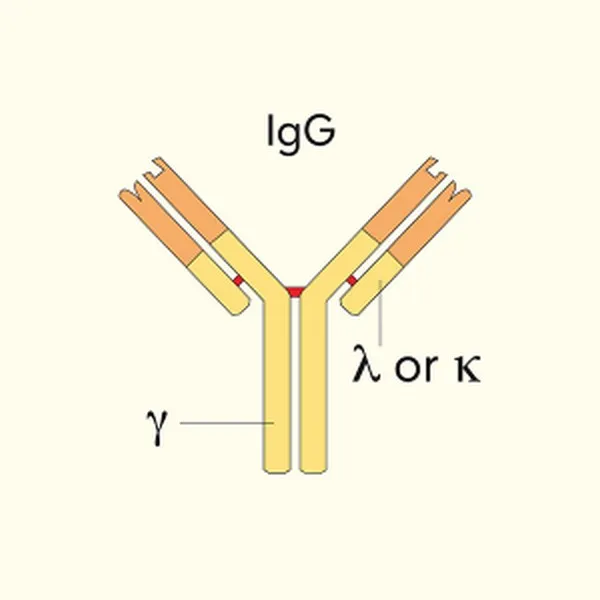
重组抗小鼠CD3e单克隆抗体(克隆号:KT3),人IgG1 Fc Silent Kappa,纯度>95%。Syd Labs PA007524.h1Fs是用哺乳动物细胞生产的重组抗体,可用于流式细胞术和免疫组织化学-冷冻等研究,可与重组人IgG1同型对照抗体配套使用。样品制备条件和最佳样品稀释度应由研究人员通过实验确定。

产品参数
| 货号 | PA007524.h1Fs |
|---|---|
| 产品名称 | 重组抗小鼠CD3e单抗(KT3)流式 | Syd Labs PA007524.h1Fs |
| 英文名 | Recombinant Anti-mouse CD3e Monoclonal Antibody (Clone: KT3), Human IgG1 Fc Silent Kappa |
| 供货商名称 | Syd Labs, Inc. |
| 品牌名 | Syd Labs |
| 别称 | 分化簇3,CD3D,CD3E,CD3G |
| 概述 | Syd Labs提供重组人IgG1同型对照抗体。样品制备条件和最佳样品稀释应由研究人员通过实验确定。 |
| 克隆号 | KT3 |
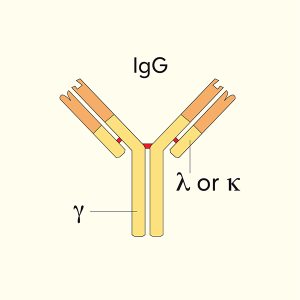
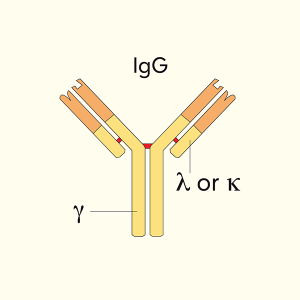
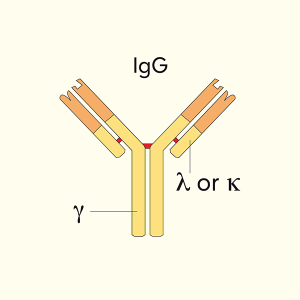
| 同种型 | 人IgG1 Fc Silent Kappa |
| 特异性 | 重组大鼠单克隆抗体(克隆:KT3)特异性结合小鼠T细胞受体CD3e |
| 抗体形式 | 0.2微米过滤溶液,pH 7.4,含0.09%叠氮化钠 |
| 偶联 | 非偶联 |
| 纯度 | >95%(在还原条件下通过SDS-PAGE测定) |
| 运输 | 重组抗小鼠CD3e单克隆抗体,人IgG1 Fc Silent Kappa(克隆号KT3) 用冰袋运输。收到后,请立即将其存放在下面建议的温度下。 |
| 稳定性与存储 | 使用手动除霜冰箱并避免重复冻融循环。 自收到之日起 12个月,保存在2 至 8°C。 请勿冻结。 |
| 注意事项 | PA007524.h1Fs Syd Labs:重组抗小鼠CD3e单克隆抗体,人IgG1 Fc Silent Kappa(克隆:KT3)是用哺乳动物细胞生产的重组抗体,可与重组人IgG1同型对照抗体配套使用。样品制备条件和最佳样品稀释应由研究人员通过实验确定。 |
| 产品咨询 | Syd Labs在国内只通过代理商销售其产品,不做直销。终端用户咨询价格请联系Syd Labs中国代理商。 关于Syd Labs产品如果有任何技术或其它问题,欢迎随时联系Syd Labs国内市场推广合作伙伴:武汉多找找科技有限公司,企业微信:duozhaozhao2024 联系电话:18162581039(龙经理) |
| 应用详情 | 流式细胞术(FC)和免疫组织化学-冷冻(IHC-F)。 |
文献
重组抗小鼠CD3e单克隆抗体(克隆号KT3),人IgG1 Fc Silent Kappa(Recombinant Anti-mouse CD3e Monoclonal Antibody (Clone: KT3), Human IgG1 Fc Silent Kappa,货号:PA007524.h1Fs)
重组抗小鼠CD3e单抗(克隆号KT3)能够特异性识别并结合小鼠CD3e(CD3 epsilon)蛋白。CD3e作为T细胞受体(TCR)复合物的核心组成亚基,广泛表达于小鼠胸腺细胞和外周成熟T淋巴细胞表面。CD3e包含胞内免疫受体酪氨酸激活基序(ITAM),在TCR复合物的胞膜表达、抗原识别及胞内信号转导中发挥着至关重要的作用。KT3抗体作为免疫学研究中的经典克隆,是识别、标记及分析小鼠T细胞群体的核心科研工具。
Syd Labs重组抗小鼠CD3e单抗(KT3,Human IgG1 Fc Silent Kappa)采用哺乳动物细胞重组表达系统生产,具备极高的纯度与卓越的批间一致性。该KT3抗体经过Human IgG1 Fc Silent改造,有效消除了抗体Fc段与细胞表面Fc受体(FcγR)的非特异性结合,显著降低流式细胞术(FACS)检测中的背景干扰。本产品适用于流式细胞分析、免疫细胞分选及各类体内外T细胞功能研究,并可配套Syd Labs重组Human IgG1同型对照抗体使用,确保实验数据的严谨性与可靠性。
抗小鼠CD3e单抗(KT3)流式部分参考文献:
1. Anti-CD3 therapy permits regulatory T cells to surmount T cell receptor-specified peripheral niche constraints
Nishio, J., et al. J Exp Med. 2010;207(9):1879-1889. PMID: 20679403
“For anti-CD3 treatment, mice were injected i.v. with 3 ug/g BW of anti-CD3 mAb (clone;KT3; protein G purified) for 5 consecutive days. For T reg depletion in BR.Foxp3 DTR mice, 50 ug/g BW of DT was administered at days 1, 2, 4, 6, and 8). For blocking studies, 75 ug of anti-IL-2 (clone; JES6-1A12; BioLegend), anti-IL-7Ra (clone; A7.R34.2.2; protein G purified), and anti-IL-15 (clone; Al0.3; eBioscience) were injected ip for 6 consecutive days, starting on the same day as anti-CD3. 0.5mg of anti-TGFB (clone; 2G7; protein G purified) was administered every other day for 2 wk. For in vivo BrdU incorporation, 0.01 mg/g BW of BrdU was injected i.p., 6 h before euthanasia.”
2. Site-directed multivalent conjugation of antibodies to ubiquitinated payloads
el Hebieshy, A. F., et al. Nat Biomed Eng. 2025;9(7):1101-1116. PMID: 40204992
“For the initial conjugation reaction, the KT3 hybridoma-derived anti-mouse CD3 Fab-Ub(K48R)don, the chemically synthesized Ubacc-ΔGG carrying an N-terminal rhodamine fluorophore (Rho-Ubacc-ΔGG), in combination with recombinant E1 and the lysine-48 (K48)-specific ubiquitin E2–E3 fusion protein gp78RING-Ube2g2 (ref. 26) were chosen (Fig. 1b). The following hybridoma cell lines were modified for the stable expression of ubi-tagged antibodies or antibody fragments: KT3 (kindly provided by Dr Ramon Arens (LUMC, the Netherlands)), NLDC-145 (ATCC HB-290) and TA99 (ATCC HB-8704). KT3 and EL4 cells were cultured in Dulbecco’s modified Eagle’s medium (DMEM) (Gibco) supplemented with 7.5% FCS.”
3. Anti-CD3 treatment up-regulates programmed cell death protein-1 expression on activated effector T cells and severely impairs their inflammatory capacity
Wallberg, M., et al. Immunology. 2017;151(2):248-260. PMID: 28211040
“The non-Fc receptor-binding anti-mouse CD3 antibody (agly-anti-CD3) was generated through genetic engineering in the Waldmann Laboratory, University of Oxford. It consists of the antigen-binding variable domain of the anti-mouse CD3 KT3 clone fused to mutated (non-FcR binding) human IgG1 heavy and κ light chains. Chimeric KT3-1.1 aglycosyl IgG1 antibody mRNA was prepared from the cells of the hybridoma KT3-1.1 and cDNA was prepared by anchor-tailed PCR.”

PA007363.r2a-5-300x300.png)
-300x300.png)