重组抗HIV V3环糖基单克隆抗体(10-1074) 人IgG1 Lambda | Syd Labs PA007177
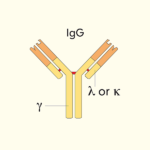
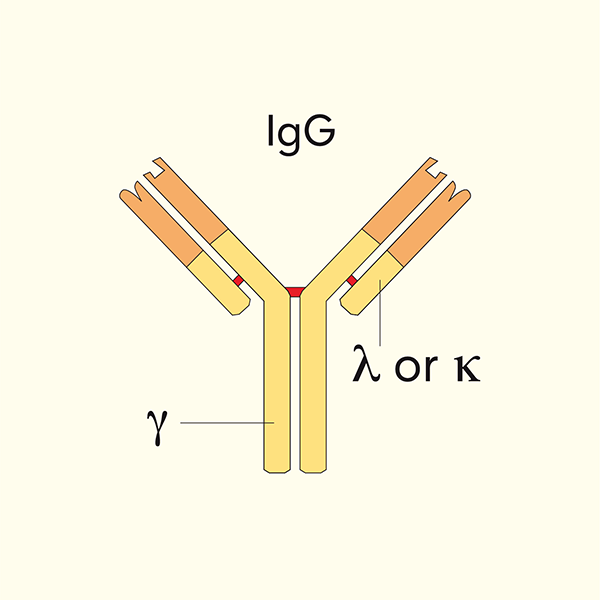
Syd Labs生产的体内实验级重组抗HIV V3环糖基单克隆抗体(克隆10-1074)为哺乳动物细胞表达的全长人IgG1 Lambda抗体,是PGT121家族中高效、研究广泛的广谱中和抗体代表成员,识别HIV-1 gp120 V3环基部以保守N332糖基为核心、并涉及N301糖基及V3环残基(G324、D325等)的糖基依赖超位点(N332 glycan supersite),对约65%跨亚型HIV-1分离株具有高效中和活性,已完成I/II期人体临床试验,在HIV感染者单药或联合3BNC117治疗中展现显著的病毒抑制与免疫压力效应,适用于HIV-1中和实验、Env结构生物学(晶体与冷冻电镜结构已解析)、ADCC等功能实验及体内被动免疫/治疗研究。
产品参数
| 货号 | PA007177 |
|---|---|
| 产品名称 | 重组抗HIV V3环糖基单克隆抗体(10-1074) 人IgG1 Lambda | Syd Labs PA007177 |
| 英文名 | In Vivo Grade Recombinant Anti-HIV V3 Loop Glycan Monoclonal Antibody (Clone 10-1074), Human IgG1 Lambda |
| 供货商名称 | Syd Labs, Inc. |
| 品牌名 | Syd Labs |
| 克隆号 | 10-1074 |
| 同种型 | 人 IgG1,Lambda |
| 反应性 | HIV-1(跨亚型,约 65% 分离株被高效中和) |
| 特异性 | HIV gp120 V3环糖基(V3 loop glycan,N332/N301 糖基超位点) |
| 抗体形式 | 0.2 μm 过滤的 1× PBS 溶液 |
| 内毒素 | <1 EU/mg(LAL 法测定) |
| 纯度 | >95%(还原性 SDS-PAGE) |
| 运输 | 冰袋运输,收到后请立即按推荐条件储存 |
| 稳定性与存储 | 使用手动除霜冰箱并避免反复冻融循环。2-8℃自收到之日起可保存1个月;-20℃至-70℃自收到之日起可保存12个月,建议分装保存 |
| 产品咨询 | Syd Labs在国内只通过代理商销售其产品,不做直销。终端用户咨询价格请联系Syd Labs中国代理商。 关于Syd Labs产品如果有任何技术或其它问题,欢迎随时联系Syd Labs国内市场推广合作伙伴:武汉多找找科技有限公司,企业微信:duozhaozhao2024 联系电话:18162581039(龙经理) |
| 应用详情 | ELISA、Western blot、免疫组化(IHC)、流式细胞术(FC)、HIV-1 中和实验、ADCC、结构生物学、被动免疫/治疗研究、抗体逃逸与病毒反弹机制研究及多种体内外功能实验 |
文献
重组抗HIV V3环糖基单克隆抗体(10-1074) 人IgG1 Lambda,体内实验级(In Vivo Grade Recombinant Anti-HIV V3 Loop Glycan Monoclonal Antibody (Clone 10-1074), Human IgG1 Lambda)
重组抗HIV V3环糖基单克隆抗体背景知识:
HIV-1 包膜糖蛋白 Env(gp120–gp41 三聚体)是病毒表面唯一可被抗体直接识别的蛋白质,也是 HIV 疫苗设计和被动免疫治疗的核心靶标。gp120 的 V3 环在病毒进入过程中参与共受体(CCR5/CXCR4)结合,其基部以保守 N332 为核心的高甘露糖簇是一个重要的广谱中和超位点(N332 glycan supersite)——该区域被多个家族的广谱中和抗体(bnAb)共同靶向,包括 PGT121 家族(PGT121、PGT122、PGT123、10-1074)、PGT128、2G12 等,是 HIV-1 最易感、且能通过免疫靶向的关键糖基保护漏洞之一。
克隆 10-1074 由 Burton、Nussenzweig、Bjorkman 等团队于 2012 年从一名非洲精英中和者(IAVI Protocol G Donor 83)中分离,属 PGT121 家族的”第二代”成员。与 PGT121 相比,10-1074 对 N332 糖基的依赖性更强、对 N334 糖基交叉识别能力弱,对携带 N332 糖基的约 65% 跨亚型 HIV-1 分离株具极高中和效价(典型 IC50 低至亚纳摩尔水平),且其重链第三互补决定区(CDRH3)长度相对较短,体细胞高突变率适中,使其成为研究糖基介导中和机制、评估疫苗诱导糖基靶向抗体反应,以及开展抗体被动治疗的重要分子工具。晶体结构解析显示,10-1074 的 Fab 通过 CDRH2/CDRH3 环抱 N332 高甘露糖的 Manα1-2Man 末端、同时以 CDRL3 接触 V3 环 G324/D325 蛋白骨架,实现糖基-蛋白混合识别;该结合模式在 HIV-1 Env SOSIP 三聚体冷冻电镜结构中同样得到验证。
在临床研究方面,10-1074 是最早进入人体临床试验的 HIV 广谱中和抗体之一:2017 年发表的 I 期临床试验证实单药静脉输注 30 mg/kg 可在感染者体内将病毒载量快速抑制约 2–3 周,并对逃逸株形成强烈免疫压力;随后其与 3BNC117(CD4bs 抗体)联用的组合疗法在临床试验中显著延长病毒抑制时间至数周至数月,为 HIV 抗体联合疗法、停药后病毒控制(”抗体介导缓解”)及免疫清除策略奠定了核心证据。
本品为体内实验级(In Vivo Grade)制剂,来源于哺乳动物细胞表达的重组全长人 IgG1 Lambda,内毒素低于 1 EU/mg、配方为无防腐剂的 1× PBS,适合用于 HIV-1 中和实验、V3 环糖基超位点识别机制研究、Env 结构生物学辅助、抗体单药/联合被动免疫/治疗研究,以及 SHIV/HIV 人源化小鼠或非人灵长类保护实验等需要低内毒素背景的体内外功能研究。使用前请根据实验体系确定工作浓度,并避免反复冻融。
重组抗HIV V3环糖基单克隆抗体部分参考文献:
1.Broadly neutralizing antibodies that target a glycan-dependent epitope on the V3 loop of HIV-1 gp120 Hugo Mouquet,et al.PLoS One. 2012.PMCID: PMC3393126 “HIV-1 entry into CD4 T cells is mediated by the envelope (Env) glycoprotein spike, a trimer of gp120-gp41 heterodimers that is the sole target of neutralizing antibodies. Anti-HIV-1 broadly neutralizing antibodies (bNAbs) that have been isolated to date target four epitope clusters on Env: the CD4-binding site, a glycan-dependent epitope in the V1/V2 loops, a glycan-dependent epitope in the V3 loop, and the membrane-proximal external region of gp41. Here we describe the isolation and characterization of two new bNAbs, PGT121 and PGT122, and the clonal relative 10-1074, from an African donor whose plasma displayed exceptional cross-neutralizing activity. These antibodies are highly somatically mutated and are unusually potent, with geometric mean IC(50) values against a panel of cross-clade HIV-1 isolates of 0.03-0.06 µg/ml, making them the most potent anti-HIV-1 bNAbs described to date. Crystal structures of PGT122 and 10-1074 in complex with gp120 reveal a glycan-dependent epitope at the base of the V3 loop centered on the conserved N332 glycan, with additional contacts to the N301 glycan and protein residues of the V3 loop. These antibodies define a highly vulnerable site of HIV-1 vulnerability that is a major target for vaccine design.”
2. Broadly neutralizing antibody PGT121 allosterically modulates CD4 binding via recognition of the HIV-1 gp120 V3 base and multiple surrounding glycans Jean-Philippe Julien,et al.PLoS Pathog. 2013.PMCID: PMC3766620 “The new broadly neutralizing antibody (bNAb) PGT121 is exceptionally potent against ~65% of global HIV-1 isolates and binds the HIV-1 envelope glycoprotein (Env) in a glycan-dependent manner. To understand the basis for this breadth and potency, we determined a 3.0 Å resolution crystal structure of PGT121 Fab in complex with an engineered gp120 outer domain that presents the conserved V3-base and surrounding N-linked glycans. The structure reveals a long, hammerhead-shaped CDR H3 that penetrates the glycan shield, contacting the N332 glycan via its protruding tip and a β-hairpin from CDR H2 that simultaneously engages the N137 glycan. Together with light chain contacts to the N301 glycan and V3 protein residues, this mode of recognition positions PGT121 to recognize a glycan-V3 supersite on the prefusion Env trimer. Negative-stain EM of PGT121 Fab bound to cleaved, native Env trimers confirms that the antibody binds at the V3 base, bridging between protomers, and provides a structural explanation for its ability to allosterically affect CD4 binding.”
3. Structural basis for broad HIV-1 neutralization by a somatically matured member of the PGT121 family Harry B Gristick,et al.Nat Struct Mol Biol. 2016.PMCID: PMC5053015 “HIV-1 vaccine development has been spurred by the discovery of broadly neutralizing antibodies (bNAbs), which protect against infection in animal models and can suppress viremia in humans. The PGT121 family of bNAbs binds a glycan-dependent epitope in the V3-loop region of HIV-1 gp120 and is among the most potent families described. Here we report crystal structures of the somatically matured PGT121-family antibody 10-1074 bound to a synthetic glycan and to an engineered gp120 outer domain at 1.9 Å and 3.0 Å resolution, respectively. 10-1074 contacts the Manα1-2Man moiety of the N332 glycan through CDRH2 and CDRH3, with minimal protein contacts to gp120, explaining its strict N332 dependence. Structural comparisons with the less-mutated inferred germline precursor reveal how somatic hypermutation remodels the combining site to create a high-affinity glycan-binding pocket, providing a roadmap for B-cell lineage vaccine design strategies aimed at eliciting this class of glycan-dependent bNAbs.”
4. Viraemia suppressed in HIV-1-infected humans by broadly neutralizing antibody 10-1074 Marina Caskey,et al.Nature. 2017.PMCID: PMC5367320 “HIV-1 immunotherapy with broadly neutralizing antibodies (bNAbs) has shown promise as an alternative or complement to combination antiretroviral therapy (cART). 10-1074 is a potent bNAb that targets the V3-loop glycan patch (N332 supersite) of HIV-1 gp120 and neutralizes approximately 60-70% of circulating strains. Here we report a first-in-human phase 1 trial of 10-1074 in HIV-1-infected individuals. A single 30 mg/kg intravenous infusion of 10-1074 was well tolerated and produced rapid declines in plasma viral load (median 1.5-2.1 log10 copies/ml) in participants with antibody-sensitive virus at baseline. Viral rebound occurred at a median of 28 days after infusion, with rebound viruses largely exhibiting mutations or glycan shifts that abrogated 10-1074 sensitivity. Pharmacokinetic modelling and resistance analyses suggest that 10-1074 monotherapy transiently suppresses viraemia and exerts strong selective pressure, supporting its further evaluation in combination with complementary bNAbs targeting distinct Env epitopes.”
5. Combination therapy with anti-HIV-1 antibodies maintains viral suppression Yotam Bar-On,et al.Nature. 2018.PMCID: PMC6004374 “HIV-1-infected individuals on suppressive combination antiretroviral therapy (cART) interrupt treatment at substantial risk of viral rebound. Single infusions of the CD4-binding-site bNAb 3BNC117 or the V3-glycan-targeting bNAb 10-1074 each transiently delay rebound after cART interruption. Here we show that up to three doses of the combination of 3BNC117 and 10-1074 maintained viraemic suppression for a median of 21 weeks after cART cessation in a phase 1b clinical trial (range 5 to >30 weeks). Combination antibody therapy was well tolerated and selected for viruses that were resistant to both antibodies only after weeks of suppression; post-hoc analyses revealed that individuals with pre-existing dual-sensitive virus maintained suppression longest. These findings demonstrate that combination bNAb therapy can provide long-term immunological control of HIV-1 in the absence of cART and provide proof-of-concept for antibody-mediated HIV-1 remission strategies.”