重组抗HIV gp120-gp41界面单克隆抗体(PGT151) 人IgG1 Kappa | Syd Labs PA007175
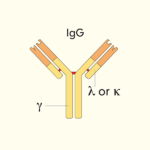
Syd Labs生产的体内实验级重组抗HIV gp120-gp41界面单克隆抗体(克隆PGT151)为哺乳动物细胞表达的全长人IgG1 Kappa抗体,靶向HIV-1包膜糖蛋白Env三聚体上位于gp120与gp41界面的四元表位,仅结合已被蛋白酶切割且折叠正确的天然三聚体,兼具广谱中和活性与Fc介导的效应功能,可用于HIV-1中和实验、Env结构与功能研究,以及多种体内外功能验证。
产品参数
| 货号 | PA007175 |
|---|---|
| 产品名称 | 重组抗HIV gp120-gp41界面单克隆抗体(PGT151) 人IgG1 Kappa | Syd Labs PA007175 |
| 英文名 | In Vivo Grade Recombinant Anti-HIV gp120-gp41 Interface Monoclonal Antibody (Clone PGT151), Human IgG1 Kappa |
| 供货商名称 | Syd Labs, Inc. |
| 品牌名 | Syd Labs |
| 克隆号 | PGT151 |
| 同种型 | 人 IgG1,Kappa |
| 反应性 | HIV-1 |
| 特异性 | HIV gp120-gp41 界面(gp120-gp41 interface) |
| 抗体形式 | 0.2 μm 过滤的 1× PBS 溶液 |
| 内毒素 | <1 EU/mg(LAL 法测定) |
| 纯度 | >95%(还原性 SDS-PAGE) |
| 运输 | 冰袋运输,收到后请立即按推荐条件储存 |
| 稳定性与存储 | 收到后 2–8 ℃ 保存 1 个月;−20 ℃ 至 −70 ℃ 保存 12 个月;避免反复冻融,建议使用可手动除霜的冰箱 |
| 产品咨询 | Syd Labs在国内只通过代理商销售其产品,不做直销。终端用户咨询价格请联系Syd Labs中国代理商。 关于Syd Labs产品如果有任何技术或其它问题,欢迎随时联系Syd Labs国内市场推广合作伙伴:武汉多找找科技有限公司,企业微信:duozhaozhao2024 联系电话:18162581039(龙经理) |
| 应用详情 | ELISA、Western blot、免疫组化(IHC)、流式细胞术(FC)及多种体内外功能实验 |
文献
重组抗HIV gp120-gp41界面单克隆抗体(PGT151) 人IgG1 Kappa,体内实验级(In Vivo Grade Recombinant Anti-HIV gp120-gp41 Interface Monoclonal Antibody (Clone PGT151), Human IgG1 Kappa)
重组抗HIV gp120-gp41界面单克隆抗体背景知识:
HIV-1 的包膜糖蛋白 Env 以三聚体形式(三个 gp120–gp41 异二聚体)存在于病毒表面,负责识别宿主 CD4 受体并介导膜融合。Env 在分泌途径中被 furin 样蛋白酶切割为 gp120 与 gp41 两个亚基,只有被正确切割且折叠为闭合天然构象的三聚体才具有感染性,也才是广义中和抗体真正识别的靶标。gp120–gp41 界面是近年在 HIV 疫苗与抗体研究中确认的一类关键易感位点,其代表性抗体包括 35O22、PGT151、8ANC195 等。
PGT151 是一株针对 gp120–gp41 界面的人源广义中和抗体,2014 年由 Burton、Ward、Sanders 等团队分离并完成结构解析。其表位由同一个 protomer 内 gp120 与 gp41 的残基及糖基、再加上相邻 protomer 的糖基共同构成,属于跨越两个亚基、依赖三聚体构象的“四元”表位;抗体只结合已被切割且装配正确的天然 Env 三聚体,而不能识别未切割或单体形式的 Env。这一特性使 PGT151 既能中和约六成的 HIV-1 流行毒株,又能通过 Fc 段介导 ADCC 等效应功能,并成为从细胞表面纯化、稳定天然切割 Env 三聚体(如 BG505 SOSIP.664、JR-FL EnvΔCT 等)并解析其冷冻电镜结构的常用工具抗体。
本品为体内实验级(In Vivo Grade)制剂,来源于哺乳动物细胞表达的重组全长 IgG,内毒素低于 1 EU/mg、配方为无防腐剂的 1× PBS,适合用于 HIV-1 中和与结合实验、Env 构象与抗体逃逸机制研究,以及需要低内毒素背景的体内外功能实验。使用前请根据实验体系确定合适的工作浓度,并避免反复冻融。
重组抗HIV gp120-gp41界面单克隆抗体部分参考文献:
1.Broadly neutralizing HIV antibodies define a glycan-dependent epitope on the prefusion conformation of gp41 on cleaved envelope trimers Emilia Falkowska,et al.Immunity. 2014.PMCID: PMC4070425 “Broadly neutralizing HIV antibodies are much sought after (a) to guide vaccine design, both as templates and as indicators of the authenticity of vaccine candidates, (b) to assist in structural studies, and (c) to serve as potential therapeutics. However, the number of targets on the viral envelope spike for such antibodies has been limited. Here, we describe a set of human monoclonal antibodies that define what is, to the best of our knowledge, a previously undefined target on HIV Env. The antibodies recognize a glycan-dependent epitope on the prefusion conformation of gp41 and unambiguously distinguish cleaved from uncleaved Env trimers, an important property given increasing evidence that cleavage is required for vaccine candidates that seek to mimic the functional HIV envelope spike. The availability of this set of antibodies expands the number of vaccine targets on HIV and provides reagents to characterize the native envelope spike.”
2. Structural delineation of a quaternary, cleavage-dependent epitope at the gp41-gp120 interface on intact HIV-1 Env trimers Claudia Blattner,et al.Immunity. 2014.PMCID: PMC4057017 “All previously characterized broadly neutralizing antibodies to the HIV-1 envelope glycoprotein (Env) target one of four major sites of vulnerability. Here, we define and structurally characterize a unique epitope on Env that is recognized by a recently discovered family of human monoclonal antibodies (PGT151-PGT158). The PGT151 epitope is comprised of residues and glycans at the interface of gp41 and gp120 within a single protomer and glycans from both subunits of a second protomer and represents a neutralizing epitope that is dependent on both gp120 and gp41. Because PGT151 binds only to properly formed, cleaved trimers, this distinctive property, and its ability to stabilize Env trimers, has enabled the successful purification of mature, cleaved Env trimers from the cell surface as a complex with PGT151. Here we compare the structural and functional properties of membrane-extracted Env trimers from several clades with those of the soluble, cleaved SOSIP gp140 trimer.”
3. Cryo-EM structure of a native, fully glycosylated, cleaved HIV-1 envelope trimer Jeong Hyun Lee,et al.Science. 2016.PMCID: PMC5001164 “The envelope glycoprotein trimer (Env) on the surface of HIV-1 recognizes CD4(+) T cells and mediates viral entry. During this process, Env undergoes substantial conformational rearrangements, making it difficult to study in its native state. Soluble stabilized trimers have provided valuable insights into the Env structure, but they lack the hydrophobic membrane proximal external region (MPER, an important target of broadly neutralizing antibodies), the transmembrane domain, and the cytoplasmic tail. Here we present (i) a cryogenic electron microscopy (cryo-EM) structure of a clade B virus Env, which lacks only the cytoplasmic tail and is stabilized by the broadly neutralizing antibody PGT151, at a resolution of 4.2 angstroms and (ii) a reconstruction of this form of Env in complex with PGT151 and MPER-targeting antibody 10E8 at a resolution of 8.8 angstroms. These structures provide new insights into the wild-type Env structure.”
4. Comprehensive mapping of HIV-1 escape from a broadly neutralizing antibody Adam S Dingens,et al.Cell Host Microbe. 2017.PMCID: PMC5512576 “Precisely defining how viral mutations affect HIV’s sensitivity to antibodies is vital to develop and evaluate vaccines and antibody immunotherapeutics. Despite great effort, a full map of escape mutants has not been delineated for an anti-HIV antibody. We describe a massively parallel experimental approach to quantify how all single amino-acid mutations to HIV Envelope (Env) affect neutralizing antibody sensitivity in the context of replication-competent virus. We apply this approach to PGT151, a broadly neutralizing antibody recognizing a combination of Env residues and glycans. We confirm sites previously defined by structural and functional studies and reveal additional sites of escape, such as positively charged mutations in the antibody-Env interface. Evaluating the effect of each amino acid at each site lends insight into biochemical mechanisms of escape throughout the epitope, highlighting roles for charge-charge repulsions. Thus, comprehensively mapping HIV antibody escape gives a quantitative, mutation-level view of Env evasion of neutralization.”
5. An Antigenic Atlas of HIV-1 Escape from Broadly Neutralizing Antibodies Distinguishes Functional and Structural Epitopes Adam S Dingens,et al.Immunity. 2019.PMCID: PMC6435357 “Anti-HIV broadly neutralizing antibodies (bnAbs) have revealed vaccine targets on the virus’s envelope (Env) protein and are themselves promising immunotherapeutics. The efficacy of bnAb-based therapies and vaccines depends in part on how readily the virus can escape neutralization. Although structural studies can define contacts between bnAbs and Env, only functional studies can define mutations that confer escape. Here, we mapped how all possible single amino acid mutations in Env affect neutralization of HIV by nine bnAbs targeting five epitopes. For most bnAbs, mutations at only a small fraction of structurally defined contact sites mediated escape, and most escape occurred at sites near, but not in direct contact with, the antibody. The Env mutations selected by two pooled bnAbs were similar to those expected from the combination of the bnAbs’s independent action. Overall, our mutation-level antigenic atlas provides a comprehensive dataset for understanding viral immune escape and refining therapies and vaccines.”