重组抗HEL VHH-hIgG1 Fc (LALAPG) 同型对照抗体 | Syd Labs PA007165.h1LA


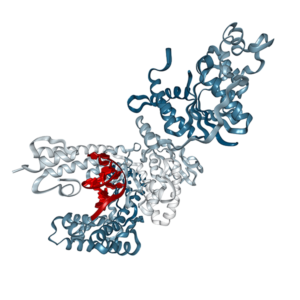
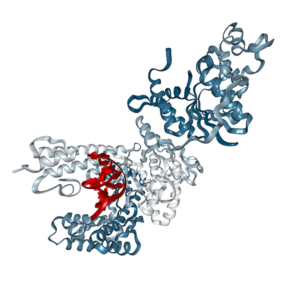
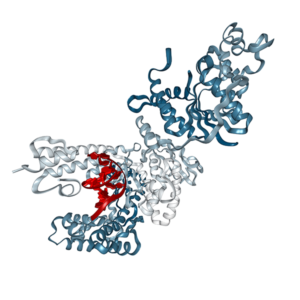
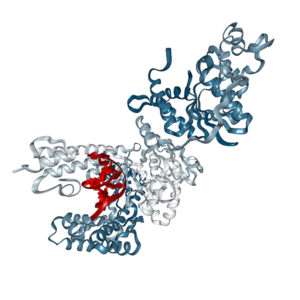
Syd Labs生产的体内实验级VHH-Fc融合型同型对照抗体,由抗鸡卵溶菌酶(HEL)的羊驼纳米抗体(VHH,克隆号D3-L11)融合人IgG1 LALAPG突变型Fc段构成,无轻链。LALAPG三重突变(L234A/L235A/P329G)可完全消除ADCC、CDC等Fc介导的效应功能,内毒素水平<1EU/mg,无动物源成分,专门用于VHH抗体、纳米抗体药物、单域抗体体内药效/毒理实验的阴性对照,也可作为普通IgG抗体功能实验的同型对照。该抗体在哺乳动物细胞中表达纯化,纯度>95%,不识别哺乳动物体内抗原,无交叉反应。
产品参数
| 货号 | PA007165.h1LA |
|---|---|
| 产品名称 | 重组抗HEL VHH-hIgG1 Fc (LALAPG) 同型对照抗体 | Syd Labs PA007165.h1LA |
| 英文名 | In Vivo Grade Recombinant Anti-HEL VHH-hIgG1 Fc (LALAPG) Isotype Control Antibody |
| 供货商名称 | Syd Labs, Inc. |
| 品牌名 | Syd Labs |
| 别称 | 抗HEL VHH同型对照、纳米抗体同型对照、VHH-Fc LALAPG阴性对照、抗溶菌酶纳米抗体对照 |
| 概述 | 体内级重组抗HEL VHH人IgG1 Fc沉默型同型对照(克隆号D3-L11),Fc段经LALAPG三重突变消除所有Fc效应功能,内毒素<1EU/mg,适合体内动物实验阴性对照 |
| 克隆号 | D3-L11 |
| 同种型 | VHH |
| 特异性 | 特异性识别鸡卵溶菌酶(HEL, Hen Egg Lysozyme),不与哺乳动物细胞、组织及内源性蛋白结合 |
| 纯化 | 采用蛋白A亲和层析法,从化学成分明确的培养基中培养的哺乳动物细胞(CHO)上清液中亲和纯化 |
| 抗体形式 | 0.2 μm过滤除菌的1×PBS溶液(pH7.4),无防腐剂 |
| 内毒素 | <1 EU/mg(LAL法测定,符合体内注射标准) |
| 纯度 | >95%(还原SDS-PAGE及HPLC测定) |
| 运输 | 采用冰袋运输,收到后请立即按建议温度储存 |
| 稳定性与存储 | 使用手动除霜冰箱并避免反复冻融循环。2-8°C自收到之日起可保存1个月;-20至-70°C自收到之日起可保存12个月,建议分装 |
| 注意事项 | PA007165.h1LA Syd Labs:该抗体为体内级VHH-Fc同型对照,LALAPG突变已完全消除Fc受体结合及补体激活效应,不会引起非特异性免疫反应;注射前请用无菌PBS稀释,避免污染。批量订购价格更低。 |
| 产品咨询 | Syd Labs在国内只通过代理商销售其产品,不做直销。终端用户咨询价格请联系Syd Labs中国代理商。 关于Syd Labs产品如果有任何技术或其它问题,欢迎随时联系Syd Labs国内市场推广合作伙伴:武汉多找找科技有限公司,企业微信:duozhaozhao2024 联系电话:18162581039(龙经理) |
| 应用详情 | 体内动物实验阴性对照、抗体药临床前研究同型对照、流式细胞术同型对照、免疫组化/免疫荧光同型对照、Western Blot阴性对照、免疫沉淀同型对照、功能实验阴性对照 |
文献
PA007165.h1LA: 重组抗HEL VHH-hIgG1 Fc (LALAPG) 同型对照抗体,体内实验级(In Vivo Grade Recombinant Anti-HEL VHH-hIgG1 Fc (LALAPG) Isotype Control Antibody)
抗HEL VHH-hIgG1 Fc (LALAPG)同型对照抗体背景知识
天然抗HEL VHH(鸡蛋清溶菌酶;纳米抗体、单域抗体,即重链抗体可变区)适合作为亚型匹配对照抗体,用于评估抗原特异性抗体的非特异性结合水平。作为理想的重组VHH同型对照抗体,重组抗HEL VHH同型对照抗体对所有人源、小鼠样本均表现出很低或无特异性结合。该重组抗HEL VHH同型对照抗体可用于体外及体内研究,适用范围包含ELISA、基于细胞的实验以及动物模型研究。
如需获取带有His标签、Fc标签的改造型抗HEL VHH同型对照抗体报价,欢迎联系我们。同时可提供抗HEL同型对照抗体及其突变体的多种偶联产物(例如染料、荧光基团偶联)。
抗HEL VHH-hIgG1 Fc (LALAPG)同型对照抗体部分参考文献:
1. Structural and thermodynamic basis for the recognition of the substrate-binding cleft on hen egg lysozyme by a single-domain antibody
Hiroki Akiba,et al.Sci Rep. 2019.PMCID: PMC6821806
“Single-domain antibodies (VHHs or nanobodies), developed from heavy chain-only antibodies of camelids, are gaining attention as next-generation therapeutic agents. Despite their small size, the high affinity and specificity displayed by VHHs for antigen molecules rival those of IgGs. Herein, we show that a VHH specific for hen egg lysozyme, D3-L11, not only displayed the characteristic binding of VHHs to a concave region of the surface of the antigen, but also exhibited a distribution of energetic hot-spots like those of conventional IgGs. We determined the high-resolution crystal structures of D3-L11 and its variant in complex with HEL, which allowed a precise mapping of the energetic hot-spots contributing to binding affinity. These results illustrate in atomic detail why VHHs are able to recognize concave surfaces of antigen molecules with high affinity, and reveal the extraordinary versatility of the immunoglobulin fold as recognition unit.”
2. The triple mutation L234A/L235A/P329G abrogates Fcγ receptor binding and Fc-mediated cytokine release by therapeutic antibodies in vivo
Ying Zhang,et al.mAbs. 2019.PMCID: PMC6816388
“Therapeutic antibodies can induce adverse effects via Fc-mediated interactions with Fcγ receptors (FcγRs) on immune cells. Here we show that the triple mutation L234A/L235A/P329G (LALAPG) in human IgG1 Fc completely abrogates binding to all human and mouse FcγRs, eliminates antibody-dependent cell-mediated cytotoxicity (ADCC), complement-dependent cytotoxicity (CDC), and Fc-mediated cytokine release in vitro and in vivo, while maintaining antibody stability and pharmacokinetic properties. The LALAPG Fc silent format is an ideal choice for therapeutic antibodies and isotype control antibodies where Fc effector functions need to be eliminated to avoid off-target effects in in vivo studies.”
3. Candida albicans-specific VHH nanobodies as candidate antifungal agents: development, characterization, and in vivo efficacy
Christian K Pfaller,et al.Microbiol Spectr. 2024.PMID: 39373478; PMCID: PMC8998267
“Single-domain VHH nanobodies represent a promising class of alternative antifungal biologics due to their small size, high stability, and tissue penetration. In this study, we developed and characterized VHH nanobodies targeting Candida albicans cell surface antigens. Using an anti-HEL VHH-human IgG1 LALAPG isotype control antibody, we demonstrated that the protective efficacy observed in in vivo mouse infection models was strictly dependent on antigen-specific binding, with no non-specific protective effects observed from the VHH-Fc isotype control. These results validate the use of anti-HEL VHH-LALAPG as an appropriate isotype control for in vivo studies of VHH-Fc fusion antibodies.”
4. Optimization of Fc engineering to eliminate effector functions while maintaining long serum half-life for therapeutic antibodies
Daniel T MacLeod,et al.J Mol Biol. 2017.PMID: 28958824
“Fc engineering is commonly used to modify the effector functions of therapeutic antibodies. We systematically evaluated combinations of Fc mutations to identify variants that eliminate binding to Fcγ receptors and complement C1q while retaining binding to FcRn for long serum half-life. The combination of L234A, L235A, and P329G (LALAPG) was found to be the most effective at silencing all Fc effector functions across multiple IgG isotypes, with no impact on antibody expression, stability, or pharmacokinetics in mice. This format is now widely used for isotype control antibodies in preclinical in vivo studies to eliminate Fc-mediated background effects.”
5. Nanobodies: natural single-domain antibodies
Jan Steyaert,Brian K Kobilka.Curr Opin Struct Biol. 2011.PMCID: PMC3145935
“Nanobodies are single-domain antibody fragments derived from the variable domain of heavy-chain-only antibodies found in camelids. Their small size (~15 kDa), high stability, high affinity, and ability to recognize concave epitopes make them valuable tools for structural biology, biotechnology, and therapy. When fused to IgG Fc domains, nanobodies gain antibody-like serum half-life and bivalent binding, creating VHH-Fc fusion proteins that combine the advantages of nanobodies with the favorable pharmacokinetic properties of conventional antibodies. Isotype control antibodies matching the VHH-Fc format are essential for rigorous evaluation of VHH-Fc therapeutics in preclinical studies.”